Smackdown Books 2021

Ordinary Hazards
We Dream of Space
If These Wings Could Fly
We Are Not Free
The King of Jam Sandwiches
All Thirteen: The Incredible Cave Rescue of the Thai Boys' Soccer Team
The Companion
Punching the Air
Show Me a Sign
Land of the Cranes
Furia
Dragon Hoops
When Stars Are Scattered
Snapdragon
The Radium Girls: The Scary But True Story of the Poison That Made People Glow in the Dark
American as Paneer Pie
Tune It Out
The Gilded Ones
The Left-Handed Booksellers of London
Switch

Monday, December 16, 2013

Settle in folks....what follows is the email conversation between Jyoti and I regarding far far away and The Children and the Wolves:

Brad:  Well, I guess, welcome, Jyoti, to your first Smackdown.  I honestly think this might be a contentious choice; I certainly have something to say about both books, but I fear (hope?) we may ultimately digress into a deeper conversation before we can, ultimately, make a choice.  Maybe we should start with Tom McNeal’s far far away, which has certainly been making its rounds on year-end Best YA Books of 2013.  What did you think?
Jyoti:  Thanks, Brad. So far this Smackdown thing has been fun & we'll see how this format goes for us. I quite enjoyed the fairy tale/modern-ish mashup of the Far Far Away setting. I liked how we were in a kind-of indeterminate time and place which made it possible to accept the goings on in Never Better. The characters were compelling and I felt drawn in from the outset, but I must say that, overall, the book could have been shorter by about 100 pages.

Brad:  Oh my, yes.  I guess that’s my problem with the novel (which I, nevertheless, enjoyed).  It is so impossibly busy for the first third or so that the reader wonders how McNeal will keep all of the balls he has established in the air:  the ghost of Jacob Grimm’s narration; the compelling notion of him as a guide for Jeremy, our protagonist; young love; the ominous threat of the Finder of Occasions; every conceivable fairy tale trope; a game show, Uncommon Knowledge...the list could go on interminably.  I kind of loved the set up...but then the pace becomes, well, glacial, and the big “twists” are so hopelessly telegraphed that I found myself more peeved at the characters’ inability to figure anything out than excitedly compelled to turn the page.  By the time the endless dungeon sequence played itself out, I was sort of exhausted myself.  I just wish that the big “events” of the novel weren’t so obvious—it really could stand a good unexpected shocker or two.  Or an ample application of a red pen.  Did it seem “teach-able” to you?  Would kids like it?
Jyoti:  I share your "get on with it" sentiment. It feels heavy-handed and clunky in the middle, but, despite that, I think it would be teachable at grade 10. All those fairy tale tropes? Those could be an English teacher's jackpot. You could go for miles on this book if you could move the kids through the plot. But, perhaps, for a term 1 class, they might really enjoy the plot. Maybe we're being picky? The notions of young love, mortality, & injustice do appeal...
Brad:  Yes, yes.  I agree.  There are some beautifully conceived and written passages, and I kind of like those plucky teen protagonists.  I guess part of my “wanting” was that the character I was most intrigued with, Jacob, takes such a back seat to so much of the action.  But, whatever.  Shall we deal with the elephant in the room, Adam Rapp’s The Children and the Wolves?  Give me one word to describe your reaction.
Jyoti:  Disturbed. Deeply. That's my reaction. Two words, but holy man...
Brad:  The Children and the Wolves is a terrifying, fever-dream of a book.  I’m still sort of reeling.  I’m not sure I ever really needed to enter the psyche of a grade eight sociopath who uses drugs and sex to control her two grade seven lackeys.  But there it is.  And it is shockingly, horrifyingly real.  He sure can write.
Jyoti:  A grade eight girl and her two lackeys who kidnap a three-and-a-half year old... I told my principal what it was about and he had to put the book down immediately. He's a risky, edgy reader but the very idea of this one chilled him. The writing is so, so visceral it drew me in immediately. I couldn't put it down, but I didn't want to read the words on the page.
Brad:  Not to mention the violence and the sex and the swearing and the drugs…
I guess the central question for me, ultimately (and I welcome others to weigh in down below in the comments section), is what makes a Young Adult novel a Young Adult novel?  Does a teenaged protagonist suggest that it is suitable for YA audiences (take, for instance, Erdrich's The Round House last year)?  This wasn’t always the case, but in this golden rebirth of YA writing, it seems to be taken for granted (The Round House showed up on many YA lists last year--is it for young adults?).  Even with the steady hand and bravery of a teacher (I’m looking at you, McKeown) to guide a teenaged mind through this nightmare, I think there is simply too much to unpack, and even my best High School readers would have trouble successfully “packing back up” the complex way that Rapp deals with some pretty heady concepts:  Religion.  Race.  The power of stories to heal or to destroy.  Absent parents.  Sex as a means of power and control.  Colonialism and cultural appropriation.  It’s sort of amazing what Rapp accomplishes in so few pages, particularly with the voices of the four characters—internalizations laid bare.  I think everyone (who can stomach it, and, for realsies, it is absolutely harrowing) should read it, but…does it move on?  And what, specifically, did you like about it?  Wait.  Did you like it?
Jyoti:  You know, I did like it. I'd never be able to teach it for the very reasons you stated, but it's a book I'd want in my classroom. I like it because it is raw and unvarnished and ugly. (For the record, I'm wearing a Jane Austen (it's her birthday, by the way) t-shirt right now.) I respect how it rips open the underbelly of neglect whether it comes from poverty or affluence. The thing that scares the protagonists is empathy and that's worth talking about. And your question is a good one. What makes YA Lit YA? Is it the old discussion about Can Lit that (I think) we've put to rest? Because this certainly isn't YA to my mind. Like Kids wasn't for kids...
Brad:  OMG.  Kids is the movie I kept thinking about while reading this, the same need afterwards for a Silkwood shower with bleach and steel wool. You’re right.  Its ugliness is what gives this book its verisimilitude and its power.  I think it might be in my top few books of this year.  It is that good.  But it sure isn’t pleasant.  But it is so incredibly written, so subtle:  OK, maybe the videogame as metaphoric parallel is sort of on the nose, but there are so many beautiful, subtle motifs and metonyms:  water, teeth, technology, time and watches…I could talk about this for a long, long time.  With adults.
So I will leave it to you.  Which book moves on (and, I guess, in some ways, it obliquely answers my question regarding defining YA fiction)?  The charming (yet too long), whimsical confection, or the sparse and gritty book about teens that isn’t necessarily for teens (really, could there be two books that are more diametrically opposed?)?
Jyoti:  What?? I'm supposed to choose? Ugh. I'm not 100% clear on this Smackdown thing. Are we Smacking down on a good book or on a good book to *teach*? Because if it's for the former, I'll go with The Children and the Wolves, without a doubt.  But if it's for the latter, then it is far far away. In this case, the distinction is that clear for me.
Brad:  This is not the first time that this has been the question.  Just choose.  I think it is sort of unlikely that either of our two books would move on beyond the next round.  For very, very, different reasons.
Jyoti:  Ok. The Children and the Wolves.
Brad:  We may have just broke The Mighty Smackdown.  AND ruined Christmas.

The One and Only Ivan vs. Goblin Secrets


The Newbery winner (in the long three year history of the Smackdown) has never moved beyond the first round but there was never a gorilla standing in the way before. Does brute strength win out? Do the poor little goblins run shrieking? These are all questions we thought we would be answering before we sat down to read. In the end it wasn’t Ivan’s brute strength but Applegate’s sparse yet thoughtful writing and Goblin Secret’s underwhelming fantasy world that made this a unanimous decision.


In Goblin Secrets Rownie searches for his missing brother by escaping a Dickensian orphan snatcher who is a mechanical bird woman (steampunk anyone?) and joining a troupe of goblin actors who are not welcome in the city under orders from the mayor. There are moments in Alexander’s writing that made me stop to copy out phrases. In addition, the goblins treatment could be used to mirror many historical situations as the best fantasies often do. For me, though, there was too much in the world underdeveloped for me to focus on the plot. Coming in at just over 200 pages seemed to mean Alexander sacrificed some of his world building leaving me knocking over flimsy stage settings in a quest to understand why there were mechanical people, what happened earlier with the flooding, how did the goblins come to be and what happened in the tunnels.


In the end, Applegate made it easy for us to embrace the humanity of a tiny elephant named Ruby and Ivan the gorilla. I know for some Charlotte’s Web is hallowed ground so I won’t say this lightly.  Charlotte meet Ivan; I think you have a lot in common.

Dia, Arlene, Holly & Annabel

Ask the Passengers vs. Maggot Moon


While on the surface these two novels may appear to exist completely independent of one another - a boy living in a 1950's totalitarian state vs a girl of small town America trying to figure out her sexuality - there are actually similarities between the two novels that make for an interesting discussion. Both novels have great moments but neither novel is without problems. 

Maggot Moon was an interesting and relatively easy read, with the very short chapters, and kid-friendly perspective.  The main character being "different" will appeal to kids who are always feeling out of place.  Particularly as the story centers on him finding a purpose to his life, and showing that his differences were not as significant or debilitating as first thought.  The totalitarian state that the story is set in makes for a very different society, one that is post-WWII England where the Germans won, rather than the allies.  There was enough intrigue to make me want to keep reading to find out what was happening, but there were some events that just didn't seem to make sense.  I would recommend this to some of my students, but I wonder how much they would understand of the background of WWII and such.  

Overall Ask the Passengers was by far the better book (sorry if you were hoping for some drawn out conclusion). Astrid Jones is a 17 year old New York City transplant who finds herself in the whisper-filled town of Unity Valley. Through the novel, she questions whether or not she is gay and the difficulty with identifying as such. The family dynamic in Ask the Passengers is perhaps the strongest literary element and has the reader wanting more pages dedicated to the workaholic mom, stoner dad, and trying-to-fit-in sister. The novel concludes all too conveniently but the earlier moments of the story overshadow the 'Okay for Now' effect. 

Both novels provide great analogy for classroom discussions: Maggot Moon contains several ties to David vs. Goliath. In Ask the Passengers, Frank Socrates is the one person that Astrid turns to when there is no one else. Throughout the narrative there is constant discussion of Greek Philosophy and the Allegory of the Cave. Even in the use of analogy, Passengers is the better novel. 

A comic about a serial killer or Dan Brown for teens? What a choice!


Jacquelyn's thoughts:
 
First off, we are not two shrinking violets out here in Sherwood Park; we enjoy dark subject matter in our literature and don’t shy away from controversial themes.  Honestly, we were both really looking forward to reading the Dahmer graphic novel!

 I simply found the narration very cavalier.  Here he is, now an adult looking back on his treatment of a young Jeffrey Dahmer.  Numerous times in the text our narrator states, “We weren’t bullying him---just having fun”.  But yes, they were bullying him!!!!

As a teenager in the 70s, I can see the young author believing that, but the graphic was written by a 50+ year old in 2012----he should recognize it as bullying!  He also reiterates numerous times the lack of adult intervention in Dahmer’s life, once again I agree, but none of his so called “friends”, including the author, ever said anything and they knew much more!

If this were a fiction piece I could handle the blasé treatment of the situation, but this is pseudo non-fiction, and as a text we are intending to recommend to young adults, I fear it sends a dangerous message in 2013.

Wasserman’s novel is a delight, if only for the excellent writing.  Although some may find it a bit “Dan Brownish”, I say Bah Humbug!  There’s nothing I love better than to learn as I read( I’m not really a “read to escape” girl), and I learned TONS!  And I was in Prague while doing it!  I’m not saying Book of Smoke and Blood will be our eventual champion, but it deserves to move on.

Carolyn's thoughts:

While I appreciated Wasserman's artistic choices in Book of Smoke and Blood, I have to admit, it left me empty.  The narrator's constant dithering about her love life annoyed me and ultimately, I really didn't care about any of the characters.  Wasserman hooked me in the beginning - wow, what an opening - but the pace for the remainder of the book slowed and for me, was fairly implausible.  However, I do commend her on penning an imaginative tale for teens that plays on the Dan Brown craze and for that and because my partner threatened to beat me up, I allowed this title to move forward.

I was haunted by the Dahmer piece. Obviously, the subject matter is similar to rubber-necking at a traffic accident, but as an educator, to catch a glimpse of the teen before he started making heinous choices, was fascinating.  I did have difficulty marrying the Cracked/Mad-like drawings with the serious nature of the subject and like Jacquelyn, did take issue to the teens' treatment of Dahmer, but ultimately, it's an important perspective on a twisted and disturbed soul.  Read it.


Bomb is da'bomb.  When truth is better than fiction, I love reading about the truth and that's what Bomb is all about.  Hokey spy techniques used to sneak top secret intelligence out of the USA into the hands of the Soviets - and all back in the 1950's when the atomic bomb was just a dream - before it became the nightmare we know now.  This is a book that all should read, to find out an interesting, and very scary part of American, and world, history.


Seraphina, on the other hand, a fantasy about dragons and such.  Lots of imagination and weird vocabulary went in to the telling of this tale.  Also a book of intrigue and upset, but of the fictional variety.  Good for all those dragon-lovers (and haters) out there.  Unfortunately, I am not one of those folk, so this was just an okay read for me.

My vote, for this first round goes to Bomb!

Donna
Ottewell

Sunday, December 15, 2013

Code Name Verity vs. Master of Deceit


It bodes well for our burgeoning long-distance Smackdown partnership that Christina and I shared similar takes on both of our books, and this post will echo much of what Christina has already written. One of the things I’ve always found very challenging – and very interesting –about the Smackdown, particularly in the early rounds, is trying to make a sound judgment about books that may have very little in common other than that they have been deemed YA in some way. This was certainly the case with our Code Name Verity versus Master of Deceit opening round. When the books arrived I assumed that a typical apples and oranges comparison had just become apples versus lumberjacks, but surprisingly, I found that despite obvious and profound differences, the books shared a common ethos and were both compelling and thought-provoking reads.

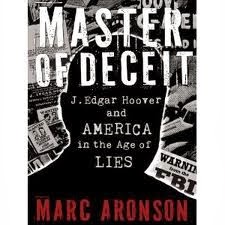
When I read the subtitle of Master of Deceit: America in the Age of Lies plastered over the arresting torn from the headlines cover, it’s perhaps not surprising that my mind jumped to the more sensational aspects of the J. Edgar Hoover story and I approached the reading with less than an open mind. So, I’m going to ask kids to read about a cross-dressing bully in a historical context they have no clue about? Yeah, right! I’m pleased to report that I was wrong and I not only enjoyed the book, but also think it is an accessible and important book for students to read. I had assumed that I had a fairly good working knowledge of this point in American history. You don’t teach The Crucible for 15 years without establishing some foundational knowledge about McCarthy, Hoover et al. but I realize now that my understanding was always one built on fragments and I had never actually read a cohesive piece of writing that brought together all these fragments. Marc Aronson’s book does this and in a way that is clear and accessible and, perhaps surprisingly, does not dwell on some of the more prurient aspects of the J. Edgar Hoover story. Instead, he offers a nuanced and surprisingly wide ranging narrative that presents a cogent argument about why this particular aspect of the American experience is relevant today.

Many years ago, I took an early American literature course and came away with the realization that you cannot understand American culture and its effect on the larger world without understanding the Puritan origins of the land of the free and the home of the brave. Aronson argues, quite successfully, but never pedantically, that our understanding of the post-911 world cannot be complete if we don’t understand Hoover and his far-reaching impact on the American psyche. It is not a long book, so it naturally stops short of being a comprehensive look at the man and the era, but he picks his spots well and if he was aiming to write a book that could be accessed by a broad audience, including young adults, he has been successful. Now, all that being said, I do have some reservations about what kind of readership Aronson’s book is likely to draw from the 140 character, infographic loving, Instagram posting (keep inserting stereotypes at your leisure) set that is a big chunk our current student populace. I think the book would be an excellent one to teach, as there is much that we could explore about style, craft, use of visuals and, most importantly, historical context. The number of students I would recommend the book to with the confidence that he/she would finish it on their own would be limited, however.


This would not be the case with Elizabeth Wein’s Code Name Verity, though. As noted above, this book is very different from Master of Deceit and perhaps more in keeping with what those well-versed in the current YA Renaissance would recognize as high-quality teen fiction. Code Name Verity pretty much offers everything you could want from a novel: morally complex, yet extremely likeable protagonists; an interesting historical context framing a complex and often riveting plot; a narrative structure that does justice to the aforementioned complexities and . . . well, I think you probably get the picture. This is a novel that you are going to feel comfortable placing on your shelf with your classics to keep your big E English teacher street cred, but I think it is also a novel that you might be picking up for a friend for Christmas, or earmarking for that kid who totally “gets” great books, but also that kid who has never “got” books until that elusive right one comes along. This might be that book. Code Named Verity offers multiple entry points for readers and I could see myself trying to get this in the hands of very different people for very different reasons. It is not a particularly easy read: one needs to be fully-present to follow the narrative threads and pick up the nuances of the characterization. It is also emotionally wrenching at times with disturbing glimpses of a world at war and all the inherent brutality and callousness that such a world demands. While there are graphic depictions of violence, particularly torture, Wein never presumes to preach at us about the horrors of war, but rather invites us into the intimate discourse of her characters in such a way that we cannot turn away. It is not a perfect book, but do such things even exist? As Christina noted, and this is perhaps inevitable in a book like this, some of the pieces fall into place a little too easily at times, but that is a minor quibble in an exceptional novel. We both agreed that it should move on into the next round. Code Name Verity may be an early front-runner for the Smackdown crown.

Saturday, December 14, 2013

Gotta Tell the Truth: Code Name Verity vs. Master of Deceit

Both of these books were interesting reads.  This is important to consider, as Master of Deceit: J. Edgar Hoover and America in the Age of Lies is indeed, as the title suggests, a non-fiction tome dealing with the CIA and it's ubiquitous leader for almost 50 years.  Seriously.  It feels strange to type it, but Master of Deceit was actually a mostly absorbing read, and the visuals used to support the author's research were evocative.  It would have been great to move something so unconventional, especially within the world of YA, forward to the next round.  However, even the airing of America's dark and dirty secrets was not a match for the powerhouse that is Code Name: Verity.
The back cover of Verity was deliberately vague, but do not be dissuaded by this.  The story focuses on a captured prisoner of war and her account of the events that have led to her imprisonment and subsequent torture by the Gestapo.  Not only does the protagonist calmly describe the torture she had endured (in an almost flippant manner that makes it seem worse) but she is consumed with concern for her best friend, who was also on the failed mission with her.  The lives of these two girls have been interwoven for so long and in such a manner that you are completely drawn into the protagonist's fears for her friend.  While at times events seemed to line up just a little too perfectly in Code Name: Verity, for the most part this was an engrossing and thought-provoking read.  Move forth!