Smackdown Books 2021

Ordinary Hazards
We Dream of Space
If These Wings Could Fly
We Are Not Free
The King of Jam Sandwiches
All Thirteen: The Incredible Cave Rescue of the Thai Boys' Soccer Team
The Companion
Punching the Air
Show Me a Sign
Land of the Cranes
Furia
Dragon Hoops
When Stars Are Scattered
Snapdragon
The Radium Girls: The Scary But True Story of the Poison That Made People Glow in the Dark
American as Paneer Pie
Tune It Out
The Gilded Ones
The Left-Handed Booksellers of London
Switch

Friday, November 25, 2016

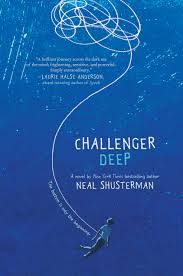
Challenger a bit Deeper than Ghost


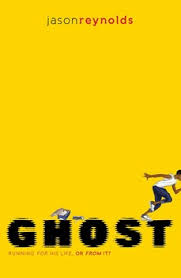
Challenger Deep.jpgGhost.jpg


As is the case with most first round match-ups in The Mighty Smackdown, we found ourselves comparing two very different reading experiences. I think all three of us would struggle to think of a student who we would recommend read both Challenger Deep and Ghost, but we could also think of multiple students and -in the case of Challenger Deep - adults who we would see deeply enjoying each book.

I picked up Ghost and, to be honest, prepared myself to be underwhelmed, despite the gleaming National Book Award Finalist stamp on the cover, and, at least initially, I was. As both Beth and Christie noted in our discussion about the books, we have read this book (seen this movie, watched this show etc.) before: The scrappy underdog (fighter, writer, artist etc. etc.) gets spotted by an inspiring future mentor and begins the (slow/tortured/awkward) process of overcoming a troubled past. In this case our young protagonist, Castle Cranshaw (aka Ghost), is a young man with a troubled family past that not surprisingly is having a pretty profound impact on his present, most often manifested in “altercations” at school that tax the patience of his long suffering mother. One day while walking home, Ghost happens on what turns out to be a training session for elite athletes and the novel begins its forward momentum. I don’t think I have to tell you too much more from a plot perspective, but in saying that I want to be clear: this isn’t some run-of-the- mill novel, despite some familiar plot tropes. Reynolds has a genuine ear for dialogue and bits that may have have rang a little hollow in the early part of the book gain resonance as the characters develop and you see how their unique voices reflect them. This is the first book in a series - with subsequent novels that will presumably feature other members of the track club - and that is an important thing to acknowledge as we read. This relatively slim volume will add up to a larger whole and Reynolds impressed me with what I think was some considerable restraint in his writing that allowed some subtleties and nuance to come out of the characters. There are moments here where awkward silence is just as profound as bombast and that’s not something every author looking to create a dynamic reading experience understands. Our whole Callingwood crew thinks this is a book that will find a wide readership in the upper elementary and junior high with a particular come hither smile towards some of our boys who may be reluctant readers. Two quick anecdotes: 1) I had a young man sitting in my office a few weeks back and Ghost happened to be sitting on my desk, he picked it up and was 30 pages in before I knew it and he asked to take it home for the weekend so he could finish it. Which he did by the time he returned it to me the following Monday 2) Just today, one of our reading intervention teachers mentioned to me that one of our young guys (who happens to be the best athlete in our school) has progressed so impressively that we’ll likely need to move him out of the intervention in the next few weeks or so. The teacher just wanted one novel to start reading with him to start him off on the right foot and I was happy to tell him I knew the perfect novel. These two moments in our little school tell us that this book may have a power that transcends its initial impressions.

If Ghost exuded an air of predictability and then became something maybe close to special, Challenger Deep began as something completely out of our range of experience and morphed into something that was both disturbingly familiar and deeply moving. If I felt I didn’t need to provide you much of a plot summary for Ghost I’m going to just flat out admit defeat in that I don’t think I have the writing chops to do this plot justice without writing another novel-length work (something I’ve occasionally been guilty of in this competition). Here’s my attempt at the proverbial nutshell:  The novel offers us a framing narrative of a high school student (Caden Bosch, who is based on author Neil Shusterman’s son and co-collaborator) as he struggles with mental illness, but it also offers us another narrative (a challenging deeper narrative, if you will) that takes us within the internal landscape of Cadon’s illness. I think we all found the opening quarter -and for me probably the whole first half- to be alternately discombobulating, and, to be honest, not terribly engaging. There were times it was kind of like The Hilarious House of Frightenstein (Look it up kids!) meets Samuel Beckett, which normally, I’d be pretty game for, but there was something missing. During our discussion I think we hit on what it was: we’re effectively launched into the deepest and most disturbing mysteries of Caden’s illness fairly early on in the narrative, well before we really get to know Caden in any meaningful sense. This is the Hamlet paradox I used to talk about with my kids: we’re asked to join Hamlet in confronting his most profound challenges, but we don’t ever get to meet Hamlet before his dad dies and he’s flung into the abyss. We get pieces of him later, through shards of memories from Ophelia, Gertrude and Horatio and it’s through these shattered memories that our empathy for Hamlet builds. This is the case in Challenger Deep, as well: We’re ass-deep in talking parrots and living bowsprits (don’t ask) before we’ve really had a chance to get to know Cadon in any meaningful sense. The effect is an ongoing uncertainty -if not outright confusion - that left me feeling kind of flat and disaffected about the novel as a whole. Now, I recognize that this is part of the “message” of the text and those feelings help us to better understand and empathize with the complex web of intellect and emotion in a mental health crisis. It’s just not anymore fun to read than it is to experience. This shifts, however, in the second part of the book, and in our discussion we really keyed in on the author’s ability to tap into not only the empathy of the other characters in Cadon’s life, but also his ability to empathize with others -most notably his parents and younger sister- while they grapple with the ramifications of his illness. As we moved through the latter stages of the book, we all found ourselves deeply invested and I’ll tell you that there was no serious debate about which book would move forward. I don’t suspect that this will find as wide an audience as Ghost and I’d be cautious about the kids whose hands I’d put this in, not so much because of anything particularly graphic or disturbing, but because it is going to require a certain degree of patience and endurance in a reader. I think it would be a fantastic teaching text in a classroom - probably grade 9-10- with the right dynamic - with some meaty themes and some sterling displays of craftsmanship by this writer. It is not a perfect book, but it is ambitious, heartfelt and very well-written and ultimately, it’s a book that may be an important way in to a conversation about mental illness that remains a difficult one for many of us to broach. Callingwood votes to move on Challenger Deep.


Thursday, November 24, 2016

Weight of Feathers too Light for Trouble!


It wasn’t an easy decision, but in the end three fourths of us voted for Trouble! There’s a possibility that two of us will be trying to bring Feathers back as a zombie pick.
 
 Romeo and Juliet as circus performers! A bit bizarre but hey… My Big Fat Gypsy Wedding came to mind.

The Weight of Feathers is filled with magical realism, yet not so different from our world. In this novel by Anna-Marie McLemore two feuding families have genetic anomalies - feathers on one and scales on the other.
Alisha really did not like it, could not get into it and gave up after six chapters. The rest of the team persevered and discovered that it’s about a world we’re not used to and a culture we’re not used to -that of the Romani. We quickly learned that cultural norms in a small group can really screw people up.
The reference to environmental themes was definitely a plus in this book though.

Unfortunately the author didn’t build the background enough to fully convince us of the depth of the characters’ belief in the curse, their hatred for each other or their conviction about the superstitions. As a team we feel that kids won’t connect with the beginning and so they may never have the chance to appreciate the great twist ending. And one small deterrent for some kids maybe that some bits written in French and Spanish are not always translated. A possible frustration for some readers? Perhaps.

Teenagers would like Trouble is a Friend of Mine!
It is a fast read with the action moving quickly along.

With twists and turns along the way an amateur investigation into a missing girl exposes bullying, on-line pornography, drug smuggling, a cult, blackmail and bribery. The author does handle some of these more sensitive issues with a gentle approach; introducing readers to some of society’s harsher realities without overwhelming them. Though it’s a bit of a fluffy read there’s some great social commentary. We’re betting that kids will recognize themselves and others, and the cliques in their school.
A couple of us found that the story did drag a bit in the middle, but then picked up again. And then it suddenly came to an end. Some of the mysteries are solved, but we’re left hanging. Of course, there’s a sequel. Thank goodness because there are a few loose threads which we hope will be picked up in the sequel (sequels?). Perhaps these unanswered questions will encourage students to keep reading with the second book.

Our final vote after wavering a bit is for Trouble is a Friend of Mine by Stephanie Tromly.

Team Ottewell:Deb, Dianne, Renee and Alisha

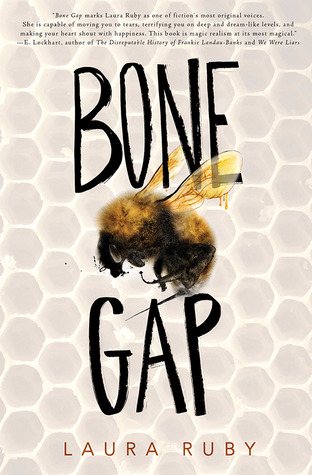
Bone Gap swallows The Lie Tree

The Lie TreeBone Gap

The Lie Tree is an intriguing read with intricate themes of family ties, societal expectations, truths and lies interwoven in a Victorian murder mystery.  Faith (yes a bit of hit you over the head symbolism from the author) tries to solve the murder of her beloved father.  As with many murder mysteries, what you thought you knew may not really be what is - maybe it is all just lies.

Bone Gap has magical elements, mixed with longing, loneliness and a look at what you think you see may not be the reality.   This leaves the reader fascinated, sometimes confused and also wondering what will happen next.  A quirky book with quirky characters - some will love it and some will hate it.

I have not consulted with my reading partner recently but she encouraged me to blog when I could. So, for me the book to continue on is Bone Gap.

Maureen

Where We Avert Political Smackdown Disaster

Image result for enchanted air               Image result for memory of us polisner

Let me start by saying I lose things...the shuffle of paper, ideas chasing around in my head, dropped calls...you get the idea. Today I lost the written record of our Smackdown conversation even though I was using it last night to share with Arlene who couldn’t be present.  What does that mean for you? I will have to re-read the sectioin on memory devices in Polisner's book. What does that mean for you? Likely the difference between memoir and the cold hard facts (which was part of the conversation.)

Let me take you back… it was a gloomy afternoon, the library lights were already out and Tammy tried desperately to find out where the meeting was. I ran into her in the hallway and we begged Andrew to leave the flashy lights of the photocopier and join us for Enchanted Air vs. The Memory of Things.

Enchanted Air is a memoir in verse recounting the author’s childhood with an American dad and a Cuban mom at the time around the Cuban Missile Crisis. The Memory of Things is a coming of age story set in New York at 911.

Arlene had already voted for Enchanted Air with two comments given to me:
  1. I loved the book I think kids could draw a parallel to their experience coming from India
  2. I would never vote for your book. (The Memory of Us was a Dia selection).

We opened with Arlene’s reason and her vote for Enchanted Air.

Tammy said she was sitting on the fence because she did not want to vote either out. She loved them both. Enchanted Air was beautiful poetry and the social teacher in her loved the idea of talking to kids about what happens to ordinary people in historical situations. She thought The Memory of Things started out slow but was redeemed as it went on by the understanding that we come together in times of crisis and acknowledge that there will come a time to of letting go.

Andrew said he was the opposite. Andrew says this a lot. He did not enjoy Enchanted Air thinking that kids could not access it easily and that it was too fluffy to convey the seriousness of the time. He didn’t really love The Memory of Things either - too fluffy again (perhaps Andrew is the type to hanker for hairless cats) and too simply wrapped up. He would vote for TMoU as it was easier for kids to pick up on their own.

Then I said something shocking...I agreed with Andrew. That never happens! Both books for me were okay. I wanted more 911 less coming of age. I loved the poetry in the beginning of Enchanted Air but then found it repetitive (Arlene feels that was a choice, I do not). I also thought many of our kids would not understand the context of historical Cuban/American politics. For the same reasons as Andrew I voted TMoT.

That left Tammy who could tie it up and send us into uncharted territories as to how to break a tie since Arlene and I were on different sides.  Andrew and I said it sounds like you were more excited by Enchanted Air because of the teachable moments. She agreed. We then pounced. Then it is a Teacher Book...in order to be most valued it needs to come with a real or at least inflatable social teacher to really make it work.  She agreed and as such voted for TMoT averting our crisis (sadly we couldn’t figure out how to fix the orange troll).

Arlene came later in the evening to debrief and does disagree with Andrew, myself and to some extent Tammy about the accessibility factor. She grabbed a book to share with a student so stay tuned for the results of that experiment.


End of the dark day...Dia’s book moved on and today, for the first time in days, the sun is shining. Coincidence?

Wednesday, November 23, 2016

Bunker Goes Down, Simon Moves on....

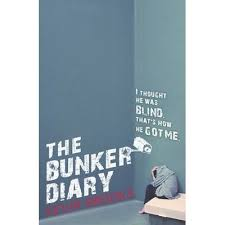
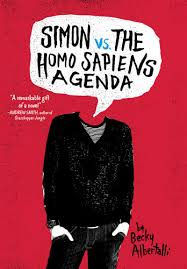
The Bunker Diary vs Simon vs The HomoSapiens Agenda

I never know how much to reveal about the book contents in the first round.  Enough to be informative but not enough to reveal all about the book in case it move on.

Van: Well, this was an easy round for me.  The Bunker Diary was a big bag of yuch.  It was a depressing story with (spoiler alert) a terrible end.  It was a book with no hope and no real redemption which would be fine if the story was written in a way I really felt emotionally attached to the characters.  Alas, not so much. We have no idea why the Bunker people were picked and no clue to the motivation of the Unsub.  It really was yucky. Deb?

Deb: Oh Bunker Diary….what can I say? It started off strong for me. I was intrigued by the main character and initially, I thought it would beat Simon...on substance, alone. Unfortunately, as the story went on and the many questions I had were left unanswered (and then multiplied) I began to lose steam...and patience. This book had me at “I thought he was blind, That’s how he got me.” but unfortunately, lost me well before the 6 blank pages at the end. However, I did find myself thinking about the story the next day, even if it was to curse the author.

Van: Simon vs the Homosapiens Agenda was not the best book I’ve read but I did actually feel connected to Simon and his friends and I wanted things to work out for him.  I just wanted more...something.  I don’t know but at times I felt the conflicts were handled quickly and kind of superficially. So my vote is for Simon...I’m not sure he’ll make it to the end but at least no one else will have the read the Bunker Diary (except Brad and Chandra)

Deb: I have to agree with Vanessa. Simon will not be a book that really sticks with me forever, nor will it be one I necessarily recommend to others, but it was good. It was an easy read with predictable situations and characters that were relatable. My vote almost went to The Bunker Diary, but I have to go with our man Simon on this one.

Chandra: Well, I am certainly on the same proverbial page as you two.  Perhaps my feelings about The Bunker Diary were somewhat influenced by the fact that I read it on November 9th… directly following the election of He Who Shall Not Be Named… but I’m fairly confident that even had I not already been chock full of angst and despair, I would have *hated* this book.  

I mean, I didn’t at first!  Brooks definitely incorporates more writerly skill and craft here than in Albertalli does in Simon, and I felt invested Linus’ struggle to escape, to hang on to his humanity, and to come to terms with his back story and complicated relationship with his father. But then THAT ENDING made me throw the book down in disgust, because what was the point?!  This book has no point. It does nothing. It has no purpose. Okay okay, I’m sure you could say that it reveals something something about the ability to stay human and compassionate even in the face of great evil and despair blah blah blah but I don’t think it did a very good job of it. (Again, though, this could be related to my November 9th feelings and my need for hope.)  

Ultimately, too, I think it was lazy.  Sure, it may be more “realistic” than a book where the protagonist and most of those closest to him are miraculously saved at the end, but in ending the way he does, Brooks didn’t need to explain a thing about the kidnapper, his motives, the cameras, where he disappeared to, the families of the missing, Linus’ father, the list goes on. Lazy.

Oh, and I almost forgot the cannibalism.

ANYWAY, so Simon vs. the Homo Sapiens agenda was alright.  To be honest, I read it a week ago, and in writing this today I had to think quite hard for a while to even remember the plot.  So, not memorable. But fine. It was my palette cleanser after The Bunker Diary, and it served that purpose well because it was fun fluff, full of predictable youthful miscommunication and mistaken identities.  It’s not great, but for my vote, it’s at least greater than the Bunker Diary.

Vanessa, Debbie and Chandra (Brad is posting on his own aka let the rant begin!)

Monday, October 24, 2016

Click on the image above or here to view larger. 

Smackdown - The Seventh Book Edition


You can't run...it's too late too hide! It's time for the Smacking to begin again. We will gather at Smackdown Headquarters on Tuesday October 25th to unveil the draw, remind everyone of the rules and start reading.  Smackers in attendance get to pick their draw...all others will be assigned. This is the best time of year! Why? The disagreements of course!

"I love disagreements.
 I love the democratic process.
 If I'm in a room where everybody agrees, I start to nod off."
-Gina McCarthy

Arlene and Dia
Smackdowns Seventh's Sons