Smackdown Books 2021

Ordinary Hazards
We Dream of Space
If These Wings Could Fly
We Are Not Free
The King of Jam Sandwiches
All Thirteen: The Incredible Cave Rescue of the Thai Boys' Soccer Team
The Companion
Punching the Air
Show Me a Sign
Land of the Cranes
Furia
Dragon Hoops
When Stars Are Scattered
Snapdragon
The Radium Girls: The Scary But True Story of the Poison That Made People Glow in the Dark
American as Paneer Pie
Tune It Out
The Gilded Ones
The Left-Handed Booksellers of London
Switch

Monday, December 17, 2012

Endangered VS The Fault in our Stars

 Endangered is the 2012 National Book Award Finalist.   The Fault in our Stars is a #1 New York Times Bestseller—both great books for teenagers. 
I think there must be a new genre out there—stories about surviving conflict in Africa.  Last year had to choose between Wonder and Now is the Time for Running— intense North American relatively minor drama vs. intense and moving stories about survival in Africa.  This is the same.  My choices determined by my skin colour?  Hope not but probably by what I can relate to.
 Endangered is the story of a half Congolese/half American child visiting her mother at a her mother’s bonobo sanctuary  in the Congo who finds herself searching for her mother during a conflict involving machetes and guns (think Hotel Rwanda) and choosing to stay and protect her infant bonobo instead of evacuating.  It is a story about that relationship and her choice.   Not too sure if I believe in her choice and not too sure I believe in her survival journey.  This is because I don’t really get to know her in any real way.  I do believe in the relationship.  I do care about the bonobos.  The story introduces war with clarity and honesty and for our junior high readers is not too emotionally devastating.
This is the second read for me of The Fault in Our Stars—and it still managed to grip me and make me bawl.  This is a love story between two teenagers who meet at a cancer group therapy session and fall in love.  The protagonist, Hazel, passes on her love for an imaginary book to her love interest and the rest of the novel revolves around their desire to find out what happens after the book ends in the lives of the fictional characters.   The book they are fixated on, An Imperial Affliction, is a story about a teenager with cancer and ends in the middle of a sentence and nothing in the story is resolved.  The author is a foul mouthed drunk who is dismissive of those who expect fictional characters to have a history beyond the book’s pages and treats our protagonists with contempt.   Confusing metaphors for me--- not sure I understand what he is saying about characters and writing.  This is a book about death and yet the characters stay or live with us beyond our reading????
John Green does not deal with sentimentality.  His characters have a very adult and irreverent understanding of their emotional lives. There is not much sacred here—cancer is a main character and it is understood from the first page that he will win at the end.  We do care about the characters and their relationship but we don’t feel manipulated.
Both strong books.   I think the book that was more emotionally gripping was The Fault in Our Stars.  So I’ll pick it and feel guilty for quite a while. 

- Wendy

Sunday, December 16, 2012


Where Things Come Back vs. Chime 

Let me just begin by saying that I'm one of the most indecisive people you’ll ever meet.  (At least I think I am…?)  This, combined with my overall ambivalent feelings towards both of these novels, made this a difficult choice. 

The feeling of being stuck in limbo was fitting for the first of the two I read - Where Things Come Back by John Corey Whaley.  Alternating narratives tell the story of Cullen, a high school senior stuck in a small town whose family is unraveling after the mysterious disappearance of his brother, and Benton, another young man who is stuck in life and looking for purpose.  These narratives converge, as expected, but not in the way I would have expected.

Parts of this novel were certainly compelling, and it kept me up reading past my bedtime on more than one occasion.  It does have its flaws, however.  All the female characters are pretty one note, and a weak note at that.  Cullen’s narration often breaks off into fantasies, typically involving zombies, that I found to be distancing.  I eventually started skimming through these sections.   The final chapters were riveting, but some readers will definitely find the ending unsatisfactory.  And by that I mean that I found the ending unsatisfactory, but am hesitant to portray myself as a simpleton concerned with such plebeian concerns as tidy endings.

Chime, by Franny Billingsley, is narrated by Briony Larkin, a young woman who lives in Swampsea, a (fictional) community not far from early 20th-century London.  Briony is completely preoccupied with keeping the promises she made to her recently murdered stepmother - to take care of her sister and to conceal the fact that she is a witch.  Then a new boy moves to Swampsea, which (surprise surprise) complicates everything.

Being a witch, Briony can see and talk to all manner supernatural creatures, like Old Ones, Mucky Face, Boggy Mun, Brownie, which the reader is introduced to without any explanation or back story.  No small amount of patience was needed in order to keep reading to figure things out.  Chime was quite beautifully written in parts, but at times I felt like this writing came at the expense of the plot’s clarity.  There were some awkward jumps in the chronology, and Briony’s incessant self-flagellation also got old very quickly.  (We get it. You hate yourself.  Please don’t remind us agai-… Never mind, you just reminded us again.) 

While ultimately I think Chime had more inventive ideas and some gorgeous prose, I also think it would have much more of a limited “niche” readership.  Where Things Come Back has more to offer for more readers.  That, combined with my need to discuss the ending with someone, means that Where Things Come Back is moving forward.  

Friday, December 14, 2012

Desert Angel vs Inside Out and Back Again

Neither of us felt we had the ultimate winner in our hands for round one, but both books had merits. 

Once you read the back of the book for Desert Angel, you pretty much know the whole book.  At the very beginning, Angel finds her mother murdered by her latest crazy boyfriend, Scotty, and she fears he’ll come after her, which he does.  The rest of the book is fairly repetitive and predictable as Angel flees from Scotty who is, indeed, looking to wipe out the witness to his crime.  There are probably a fair number of kids who’d read it for the adventure, but it’s not especially profound or original. 

Inside Out and Back Again is the story of a year in the life of Ha, a refugee from Vietnam during the war.  Her family ends up in Alabama.  It is somewhat autobiographical and written in verse (but reads like prose), which makes it a quick read.  While more kids will probably pick up Desert Angel on their own, Inside Out and Back Again is the better book.  The protagonist is lively, hating to be told she can’t do something because she’s a girl.  At times, she can break your heart and at others you will admire her.  Plus, she makes some pretty amusing observations about learning English.  Renae suggested that it might pair well for classroom use with American Born Chinese

Advancing to round two:  Inside Out and Back Again.  
-Laura and Renae

Wednesday, December 12, 2012

No Ordinary Day vs. The Fingertips of Duncan Dorfman


I'd like to begin this review by thanking my newly arrived son, Aaron. Admittedly I was struggling to find the time to really get into my first read, The Fingertips of Duncan Dorfman, until that wonderful December evening that the 5 lbs. 4 oz little man decide to arrive three weeks early.

Being a new blogger to the illustrious Smackdown and the only bracket to be contested at the selection meeting, I felt a great amount of responsibility with these two works. Initially I believed this would be a easy choice - the story of an orphan girl in India written by an acclaimed author vs a nerdy kid from Pennsylvania - and with that I chose to read Wolitzer's novel first.

The Fingertips of Duncan Dorfman  
   This is the story of three young kids from different parts of America all travelling down the Florida for the annual Youth Scrabble Tournament. Each kid (Duncan, April, and Nate) has their own reason for attending the tournament and each one is an interesting character.

   I was surprised with this novel in its somewhat whimsical telling of events and one of the highlights to the novel was that a certain string of events had me thinking back to Fred Savage being chased through Universal Studios in The Wizard. A note to authors out there - if you can get me thinking about such 1989 classics like The Wizard, you're going to do very well in this tournament. Maybe in my next round Sloth will save the day as he rips down the pirate-ship's mast on his way to help Chunk and the gang...I digress. 

   While it is not a 'perfect' story and there were times when I wondered what the purpose of a moment was, overall it was an enjoyable read. Perhaps the strength of the novel stems from the fact that it is not a futuristic post-apocalyptic dystopian vampire-werewolf love story. The heart of The Fingertips of Duncan Dorfman is that it is a nerdy tale of the story of three kids and their adventures at a scrabble tournament.

No Ordinary Day
   I had high expectations for No Ordinary Day. Unfortunately, this novel was not able to deliver on those expectations. I believe that Ellis' novel held the underlying goal of exposing just a brutal way of life in Kolkata and the cruel interactions with with others and, unfortunately, more often than not this came off rather contrived. The moments where the novel was successful and genuinely connects with the reader are too few and far between. I found I spent more time as I read reflecting on my increasing enjoyment of Duncan Dorfman than I did engrossed in Valli's tale.

The novel that will advance is The Fingertips of Duncan Dorfman. 

Tuesday, December 11, 2012

If I Grow Up by Todd Strasser VS All Good Children by Catherine Austen Dear Todd: you are not a young black street kid who grew up in the worst kind of humanity possible.As a result, the way you have Deshawn speak and act feels unnatural and it is really obvious that you have no connection to the character. If you can get past that, it is an incredibly sad story of a kid who ends up joining a gang, despite all good intentions and his gramma's love. What I did like was that in the end (spoiler alert) Deshawn did not find the goodness in his heart and run away, go to a respectable college and make good. He needed money for his family, he joined a gang, he sold some drugs, he killed a man. Don;t get me wrong, I like a Strasser book, Give a Boy a Gun was great, but this one feels like Todd is now reaching to hard and to far away from what he knows. All Good Children - Dear Catherine,pick up the pace girlfriend. It took me a good 100 pages to get hooked into this book and to be frank, Katie, normally I would not give a book that much time. That being said,once hooked, I was hooked. The tale of a a not to future society where some of the rules of civility are broken and Max, a high school student, is attending an academic school so he can be succesful. It turns out that even the academic kids can be a pain sometimes so the schools begin a "vaccination program" that changes the kids into zombie-like students. "Yes, ma'am", "We are all here to succeed", etc.. And they don't need parent permission to do it. Will Max be able to fool everyone that he has received the re-education or will he be get the shot? Bonus - Canadians are the seen as the good guys, which we are! Moving on...All Good Children.

Friday, December 7, 2012

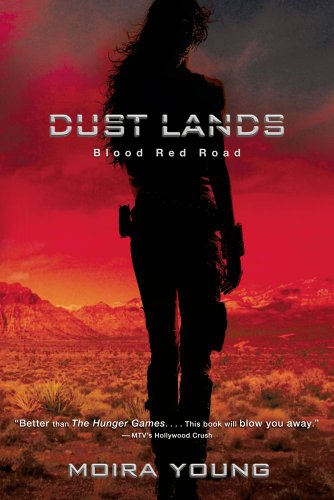
Everyday VS Blood Red Road

Okay, so I've enlisted a student helper this year. She's an AVID reader and will give  feedback/comment on each of the choices...hope that's okay! 

Teacher thoughts on Everyday: This is a way cool book. At first I was just totally confused and thought, Okay, just suspend your disbelief and go with it. And then I thought, This is just going to evolve into some weird ultra weird Harlequin romance. And then I finished, and I thought, Wow. Too cool.  

The basic premise of the book is that this kid wakes up every morning in a different body...s/he has no control over how this happens and it has been happening ever since birth (which did leave me wondering how s/he would be able to form viable attachments or relationships in young adulthood), but remember the suspension of disbelief note above...I think the one thing that I was disappointed in was that there was such tremendous potential within the book to develop empathy by understanding how the world looks through others' eyes - and this did happen to some degree, but I think it could have been more pronounced. The protagonist, "A," is so into himself and his girlfriend that we don't hear as much about the kids whose bodies he inhabits. However, overall, I enjoyed it for its uniqueness.

As for Blood Red Road - don't think it's much of a contest. Although it was rather a page turner, I found too many distasteful aspects for me although lovers of The Hunger Games might enjoy it. It's your standard dystopian fantasy with a dash of romance. Basically it would appear as if the world has declined to a state of decay (both environmentally - a drought - and morally - the majority of the population is hooked on some addictive plant and they get their kicks from watching people kill each other in a Christian-in-a-lion-pit sort of way, only human teen v.s. human teen. I was willing to suspend my disbelief while reading Everyday on the basis that it was an original premise, but in Blood Red Road, I wasn't able to believe that a nasty (as in really, really, really nasty) bad guy wouldn't pull the trigger on the gun he has held to a child's head when he sees that the "gig's up" or that one wouldn't check to make sure aforementioned nasty was dead after he'd been hit so that he wouldn't keep popping up and offing others in your party. Plus, as an English teacher, I can handle dialect when it's done well, but I found the feigned dumbed-down dialect in Blood Red Road just plain annoyin' so's I cain't recommen' this here un to go on no how.

Monday, December 3, 2012

The Year of the Beasts vs. The Big Crunch


The Year of the Beasts combines graphic novel and prose to tell the story of sibling rivalry and jealousy between Tessa and Lulu.  The sisters were close until they both got a crush on the same boy.  Their adventures with friends and family make up the bulk of the story. The prose part of the story moves forward, while the graphic novel seems to move backwards in time.  Upon finishing the book one might feel the need to re-read the beginning of the graphic novel and say 'ah, I get it...'

The Big Crunch is a story of boy meets girl, boy gets girl, boy loses girl, and Spoiler Alert * boy and girl end up together.  If you don't want to read this book, just look at the cover - it tells the whole story.  While it was a decent, light, moderately entertaining read, it was nothing special.  There are certainly girls we would recommend it to at the high school level.
*strange note - the fly leaf lists the names of the characters as Jen and Wes, when they are actually June and Wes.

Even though The Year of the Beasts was somewhat confusing, we couldn't put it down.  It was intriguing and  captivating and we couldn't stop reading. We're sending it through to the next round.
Barb and Mona