Smackdown Books 2021

Ordinary Hazards
We Dream of Space
If These Wings Could Fly
We Are Not Free
The King of Jam Sandwiches
All Thirteen: The Incredible Cave Rescue of the Thai Boys' Soccer Team
The Companion
Punching the Air
Show Me a Sign
Land of the Cranes
Furia
Dragon Hoops
When Stars Are Scattered
Snapdragon
The Radium Girls: The Scary But True Story of the Poison That Made People Glow in the Dark
American as Paneer Pie
Tune It Out
The Gilded Ones
The Left-Handed Booksellers of London
Switch

Wednesday, November 25, 2020

When You Trap a Tiger Beats Like a Love Story


Both books have a lot going for them: touching and challenging friendships, main characters who find their courage to become more themselves, and troubled family relationships that become a source of strength. The setting of Like a Love Story was extremely rich. I hadn't realized I wanted a novel set in New York City in 1989 at the height of the AIDS crisis, but it turns out I did. The three young people we follow are brave, flawed, and determined to find their place in the world and each others' hearts. A complete pleasure to read but unfortunately, not out winner.


In the end, When You Trap a Tiger won our votes largely because of the times that we're currently living in. As readers, we felt we needed some escapism which Tae Kellers perfectly provides with the magical realism in the novel. I mean, who doesn't need a fierce, magic, talking, tiger in their life right now. The Korean bedtime stories also gave us a much-needed feeling of comfort and whimsy in our lives. Another thing When You Trap a Tiger has going for it are the diverse characters. Readers of all ages will enjoy getting to know this Korean American family and might identify with the mixture of pride and shame that can come with having a first generation immigrant grandparent.


I also found it really lovely that the novel centered around three female generations within one family - grandmother, mother, and daughters - which reveals the legacy that our choices and decisions create for those we love. Finally, the larger question that the book raises - “What happens to those who journey in order to escape their problems?” - is provocative. Often we tell the stories of those who choose to stay, stand their ground, and suffer through things out of their control, but I appreciate the point raised by When You Trap a Tiger that those who choose to leave have beautiful and tragic stories that need telling also. 


So, grab some kimchi, make some tea, and go meet a tiger.


They Went Left vs. When the Ground is Hard


Shelley’s Thoughts:

It is always fun when my expectations are tossed aside. I chose this bracket because I recognized Monica Hesse’s name and I had high hopes for the novel They Went Left. Without giving too much away, the story was a captivating one. The protagonist, Zofia, is a young Jewish girl from Poland who is searching for her younger brother in the months after WW II. She is driven by the promise to her brother that she will find him once the war is over.  An interesting part to this story is that it takes place very close to the end of the war. This is a time period that is full of questions - Where did the refugees go? Who was looking after them in this place that has already been ravaged by war? How did people reconnect with family? Where do they go? Another idea that was developed was the “nothing girls.” These are the young girls who physically survive the concentration camps, but they are broken emotionally. They are hospitalized because they are unable to look after themselves.  While I was impressed with the different focus for the novel, and a few of the surprises, I did find my choice lies with the second novel.

The novel When The Ground is Hard was an emotional read for me. There are moments where I was very uncomfortable, but the moments of courage that these female characters experience were wonderful. It is a story obviously about race and the impact of mixed race during the late 1960s. But I was really intrigued about the narrator’s realizations about being a female during this time. There is danger lurking everywhere because they are female with the additional element of being mixed race living in Swaziland. There are many elements to connect with the high school experience as well: mean girls, cliques, social hierarchy, favoritism etc. But as a woman, the saying “when the ground is hard, the women dance” is as true now as it was 50 or 200 years ago. I guess I am looking at this through the “feminist lens”!!  

So my vote is the latter one.  I hate it when there are two solid contenders. Hopefully, there will be more that are this good.

(The rest of the Eastglen team had some great discussions about both books and also vote for When the Ground is Hard to go forward. Thank you, Shelley, for blogging for us!) 

PS - Check out this young person's very cool art project/review about When the Ground is Hard!

Frankly in Love vs. King and the Dragonflies

 Frankly in Love vs. King and the Dragonflies


Both were very good and very different books. King and the Dragonflies is about a boy (King) that has tragically lost his brother whom he thinks is now in the body of a dragonfly. King has flashbacks of his brother talking in his sleep and the stories his brother tells have great symbolism. While he and his family struggle with this loss, his ex-best friend goes missing and there is way more to that story than meets the eye. It is a story about friendship, mistakes, and finding out what really matters to you. 


Frankly in Love, I LOVED! It was hard to get into at first because it seemed as if it would be another book about angsty teenage love. The love story in this book is not what you expect. It ends up being a story about family, friendship, and the sacrifices Frank (the main character) has to make to maintain those relationships. He wins some and loses some but learns a lot along the way. I know you will too. It was beautifully told from the perspective of a firstborn Korean-American teenager. I laughed and I cried! Oh did I cry. 

Frankly in Love has to move on to the next round!


Deb

I read Genesis first. 


I didn’t love it. I wanted to love it, and I felt like I learned a lot about the perspective of the main character by reading it, but I didn’t find the writing to be overly strong and I felt myself rolling my eyes sometimes at the forced inclusion of musical references and the sometimes cliche responses of the characters. 


This Place was the clear winner for me. It does a beautiful job of giving us history lessons that are meaningful, succinct, and powerful. I think that the way the author gives us the details of the event, shows us on a timeline when it took place in the history of our country, and then tells the story in the graphic novel format will be impactful for students and will help them to see these historical events from the perspective of First Nations, Metis and Inuit people. Having the illustrations along with the more traditional presentation of facts will also support students to understand these events on a much deeper level. This book would be a wonderful addition to any class library from grade 3 up to grade 12. 


My vote is for This Place: 150 Years Retold.


Ashley 


I had high hopes for Genesis. The author allowed me to really learn a lot by presenting the world of a protagonist that is very opposite from my own experiences, but that was the big struggle for me, I learned a lot in this book. Rather than presenting itself as an intriguing piece of literature, Genesis reads more like a lesson and I need more than that from a book to truly fall in love with it. 


I’m probably (more than probably) biased towards This Place because I love graphic novels and the graphics in this novel are STUNNING. It is a collection of different Indigenous Short Stories, each with not only a different author, but a different illustrator. There is something for everyone in this story, as if you ever have a problem with any of the stories/writing you can just flip a few pages to find a stunning new piece of writing! This book succeeds where Genesis stumbled, in that I learned a lot throughout this book, but I didn’t feel like that learning was forced.


My vote is for This Place: 150 Years Retold. 


Tuesday, November 24, 2020

We Didn’t Dig Dig, but Slay Slew


Back in the day, when I was teaching high school English, one of the things I loved most was finding unique texts that subverted student expectations of genre, structure, voice etc. I can’t even remember the specific text he was referring to, but I distinctly remember a student saying to me after a pretty engaging class discussion, “You know what, Mr. McKeown? I really enjoyed talking about that book with everyone, but I totally didn’t enjoy reading it.” I totally got where he was coming from, of course, as I think we’ve all had that experience at some point, and that little anecdote came back to me about ¾ of the way through Dig. I could see all of the pieces starting to fall into place in this complex novel at that point, and they are important pieces. Having spent the last four years watching what seems to be the death throes of a long crumbling democracy (Note: I’m starting President Obama’s memoir as soon as I’m done writing this, so perhaps I haven’t totally given into cynicism and despair in that regard), I can recognize the, at times, poignant social commentary at work here. The narrative structure of the novel was obviously carefully crafted, but for some reason it really left us all cold. We had a good talk about this as an SBS smackdown group the other day and the question we grappled with was if the narrative construct - as thematically appropriate as it might be - ultimately sacrificed our deeper connections with these characters and I think we landed on a resounding “Yes.” I have no question that kids will respond to some of the specific circumstances these kids find themselves in and depending on their level of understanding of -and engagement with- the frightening polarization that seems to frame too much of our modern discourse, they will recognize the novel as an accurate representation of our modern ethos. We have a number of fairly sophisticated readers who have walked down our halls these past few years and we were struggling to think of one for whom this book would really resonate. One other minor but fairly substantial quibble: for a writer as skilled as this I’m not sure that making one of our central characters - the Freak - a ghost really served the larger ends of the novel all that well. I’m not opposed to ghosts or breaking the laws of physics in any general sense, and I have written positively about Ghost Boys and (way back) Everyday in these very Smackdown pages, but here, again, the Freak turned into a narrative device rather than a fully fleshed out character. It served to tie everything together certainly, but I’m going to suggest that this actually did a disservice to the poignancy of her story. So, I know this might get us some smacks as there is certainly lots of high critical praise for Dig, but that’s where we are at. 


Slay was a book that took a little while to warm up to and I’m fully prepared to own that as a flaw in my own specific reading context. I’ve played the odd video game over the years, but I’ve never been fully immersed in a digital world. Objectively, I’d say the author did a good job of crafting what it would be like to be within Slay (the game) and I could picture a number of students really being transported into that space. I just couldn’t get there. It would be like trying to imagine a mountain or an ocean if you’ve never actually experienced one. But like I say, that’s just me being old. Like Dig, this is a book that has something to say about important issues that are uniquely representative of our time. Slay is not as narratively adventurous - although it is not without ambition - and I think we all felt a little more connected with the characters, particularly Emerald. I think it is always a challenge for an author who hopes to educate - as Brittney Morris clearly does - to do so without being pedantic and she walks this tightrope quite ably. The thematic home base of the book is that in order to combat firmly entrenched systemic racism, young people of color need a space of their own where they can be free to live their lives without always being cast as “other.” In this book, that space is Slay, but the real drama in Slay plays out as our young protagonist navigates the “real” world of friends (and lovers), family and politics and I think she really has something valuable to say about the frightening complexities of our time. The author doesn’t shy away from nuanced discussions, but the book also has the appeal of a fairly straightforward narrative, that builds towards a satisfying conclusion. While my age may have been an impediment to my connections with the intricacies of the game itself, I think being a child of the 80s served me pretty well in understanding the multitude of African American pop culture references that are at the heart of both the game and the novel. Ultimately, We thought this was a book that could speak to a range of kids and have them entering into an important and timely dialogue about race and relationships in a very entertaining way. The first round is always a tricky one, but we like Slay for the underdog win here. 


Not Much of a Fight

I had the task of picking for our team. My first choice disappeared before our number got called, and so did my second. I'd heard good things about Maybe He Just Likes You, so I went for it. If I'd realized Fighting Words was by the author of The War that Saved My Life from a couple of smacks ago, this bracket might have been my first choice. 

In The War that Saved My Life, Kimberly Brubaker Bradley created an amazing story and a character with a unique and powerful voice. Delicious Naeveh Roberts has an equally compelling voice and a forceful story to tell. The things that happen to Della and her sister are heartbreaking, but it's a novel that sings the power of hope and healing. The author manages to deal with drug addiction, sexual assault, and attempted suicide in a way that is both very honest and entirely appropriate for young audiences.

Maybe He Just Likes You left us all a bit uncomfortable. Maybe it was just that we, as teachers, don't like to think that unwanted touching may be happening around us undetected. That we miss calls for help. That our favouritism is obvious. Or maybe it's that Barbara Dee's writing came up a bit short. It felt like the issue was the driver, rather than storytelling. The ending also wrapped everything up too neatly, with a pretty bow on top. Kudos to Dee for addressing a timely and difficult topic, but it felt too much like she wrote the book to address the topic. 

Fighting Words is ready to take on another contender.

Renée, Lynette, Kym, Jessica


Monday, November 23, 2020


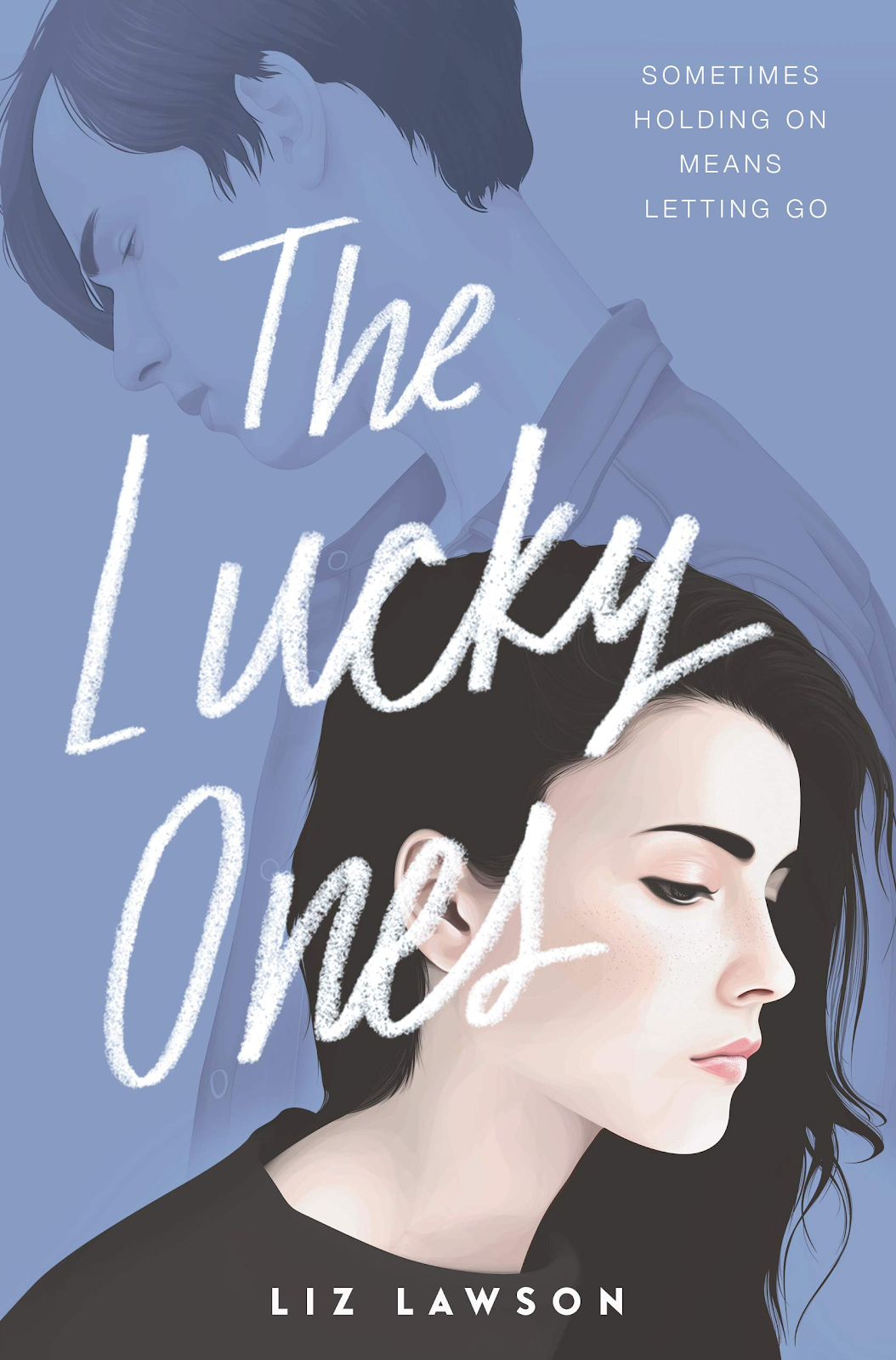
The Lucky Ones was the unlucky book this time and Everything  Sad But True is happily the winner. 


Some group members were captivated early by one book:

I knew early into Nayeri’s story that I would feel sorry for any other title pitted against it. Our narrator, Khosrou, takes us quietly by the hand to bear witness to his reflections on his journey as a refugee. We cannot help it. We fall in love with him through his storytelling. From afar we appreciate the loss of a child, separated from a life of comfort and security. Throughout his journey with his sister and unstoppable mother, he shares stories from the past that illustrate how far they all have come as they wait for word that a brighter future awaits. (Carrie)

 I really enjoyed Everything Sad is Untrue, especially since I've also read the author's sister's novel The Ungrateful Refugee, which touches on the same situation but from a different angle and with a very different style. I didn't mind the wandering quality of the storytelling, but I can see how that might turn off a reader who is expecting a more straightforward narrative. (Erin)

Some were balanced in their affections: I enjoyed reading both books and for me they spoke to the heartache that is experienced when a person's world is turned upside down. (Maureen)

And some were, well, not as subtle: The Lucky Ones was a bit hard to stomach, and yes, I hate to admit it but Brad was right about judging this book by its cover! (Kim)

Also, the audiobook experience of The Lucky Ones, for one member, was subpar because the swearing seemed forced and became tiring to listen to.

Carrie summed it up nicely: For me, however, Nayeri’s tale is a win for me for several reasons. The authenticity, artfulness and beauty in the storytelling supports the maturity with which Khosrou comes to understand others and the world. His observations are relevant to the experiences of May and Zach; his observations explore universal truths of the human condition. For example, “Suddenly evil isn’t punching people or even hating them. Suddenly it’s all that stuff you’ve left undone. All the kindness you could have given. All the excuses you gave instead. Imagine that for a minute. Imagine what it means” bear relevance to the guilt that unfolds for many characters in The Lucky Ones.

The barriers built around May through Lawson’s abrasive dialogue and oversimplified and (at times) melodramatic narrative style distance the majority of other characters from her and, I am sad to admit, this reader as well. There is a tenderness, grace and hope in his storytelling, even amidst horrible circumstances. Masterfully, Nayeri enables the reader to both empathize and be inspired by Khosrou and his family.

And those are some thoughts from Group 9. Bring on Round 2.