Smackdown Books 2021

Ordinary Hazards
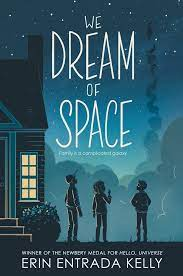
We Dream of Space
If These Wings Could Fly
We Are Not Free
The King of Jam Sandwiches
All Thirteen: The Incredible Cave Rescue of the Thai Boys' Soccer Team
The Companion
Punching the Air
Show Me a Sign
Land of the Cranes
Furia
Dragon Hoops
When Stars Are Scattered
Snapdragon
The Radium Girls: The Scary But True Story of the Poison That Made People Glow in the Dark
American as Paneer Pie
Tune It Out
The Gilded Ones
The Left-Handed Booksellers of London
Switch

Friday, November 19, 2021

Windows and Mirrors


American as Paneer Pie vs. When Stars Are Scattered


We didn’t all agree when it came down to the vote but we did agree that we were sad to see these two books in the same bracket because it meant one of them couldn’t move on when we all felt both should and could move on. 


A few of us came into the meet very sure of our votes and were quite happy when the vote did sway in our favour.  


A few of us were very undecided and saw incredible value in both reads for ourselves and our students. 


American As Paneer Pie for younger, perhaps more innocent girls, seeing themselves in the pages or moments of being torn between two worldviews. We learn a lot about this through Lekha, who is Desi, but born and raised American. It could be a mirror for many of our students and was an inviting window for some of us. 


When Stars Are Scattered for readers who enjoy a good graphic novel and a way to shed light on the true story of the author, Omar Mohamed’s experience growing up in a refugee camp in Kenya after fleeing Somalia during the war. The reader that voted for this one and held firm in her vote saw a window into her family’s own story and Paneer Pie was more of a mirror. In this round, she preferred the window over the mirror. 


Both of these are powerful stories that offer a window for some of us and a mirror for others. That is a win-win in our eyes and this is what made the decision so difficult for some of us. 


Many of our students come from or have connections in India and Pakistan and do indeed celebrate Diwali and because some of us read this book just a few short weeks ago when our students were celebrating Diwali - among many other things, that stuck with us. So maybe the timing? Maybe the school we teach in and the demographic we teach. Maybe the way our students often say “you can call me whatever you want” when what they really mean is “please just learn to pronounce my name properly and don’t make a big deal of it.” 


In the end, it came down to looking at what our students and most definitely ourselves could learn from Lekha’s story of growing up in America as a Desi girl. The two undecided readers convinced themselves to vote for Paneer Pie - just simply from the windows it offered us and the lessons that resonated. We are sending Paneer Pie onto the next round but we are already preparing our talking points to bring Stars Scattered back as a zombie pick. 


We learned and we grew. And we hope our students feel the same in the books they choose. We thought some of our students might see a part of themselves between the pages of Paneer Pie. 


Windows and mirrors - isn’t that the beauty of reading?   


A little light smack talk to start Smackdown!

CCK reporting for duty. We are collectively holding our noses and putting Radium Girls forward. What follows is our tag-team dialogue to support this unfortunate but necessary selection.


C1 - Both Radium Girls and Tune it out tick along quickly, each following an easy to follow arc with an intriguing concept to bring young readers in. Both texts also cover content that many young readers won’t be familiar with, explaining radium poisoning in dial painting factories, and sensory processing disorder, respectively. Yet both of these texts lets the audience down in the same manner; they focus too much on the suffering of the young women they depict, failing to represent them as fully rendered humans. 

K - Agreed. I think the books are reasonably accessible and will engage a variety of readers. Both offer perspectives and conflicts that are engaging and not-common-fodder for YA texts. Both fall a bit short. TIO because it underdevelops both the characters and the conflict it establishes and RG because it presents itself as nonfiction but then sensationalizes and fictionalizes things for theatrical emotional impact. It feels tabloidy and maybe even a bit exploitive.

C2 - Full disclosure: If I had my druthers, neither would move forward. That said, I realize holding my breath is not an option, so I’d best get on with it…


Rarely have I reacted to a book with such ire as I did with Radium Girls. Ask my family, I was hostile for the weekend I dedicated to reading this book. I began in earnest, hopeful that I would learn all about these historic women. Rather than developing a backstory that would bring them to life, they are reduced to flat characterizations with trivial information. 


Hair styles and fancy coats? Engagement plans? 


Jaw bones come out in doctors’ hands, people. 

With. Ease. 

Tumors the size of footballs. 


The horror I felt in reading how their bodies literally disintegrated was matched by my horror in the apparent lack of awareness of who they were as human beings. 


C1 - In Radium Girls there are frequent and ghastly descriptions of the young victim’s radium poisoning as they fight to bring their employers to justice. Jaw bones are being pulled out by dentists without effort- these women are literally disintegrating from the inside out. At the same time, the women never felt fully formed to the reader because the only thing we really know about them is their medical doom.  We get a few brief descriptions about who will miss them when they die, but other than that the descriptions of the women are brief and perfunctory to make room for the detailed accounting of their physical deterioration. They are reduced to damaged bodies rather than people.

K - I don’t know why Moore thought it necessary to dramatize and fictionalize. I absolutely get the fear that names and dates and facts would read like a phonebook but if Moore wasn’t capable of writing impactful nonfiction then she should have written historical fiction instead. I’m actually a bit insulted for the young readers she thinks can’t empathize with these human beings without her creative musings stringing the facts together. That said, the horror is real and it’s not all that historical. The injustice of it would have a powerful impact particularly when connected to contemporary examples of employer abuses and the industrial toxins that affect people all around the world this very minute.

C2 - I spent much of the time wondering at the decision to leave these women’s characterizations so undeveloped. Is it simply because information was unavailable? The choice to steer readers to attend to the physical descriptions did draw attention to the discrimination and negligence that still makes me ragey (I know ragey isn’t a word, but it’s the right one.). I would never, ever, hand this to a young reader to read on their own. Never. But the knowledge of what happened merits discussion. 


C1 - Tune it out also focuses on the protagonist’s discomfort caused by an unnamed sensory processing disorder as she is pulled away from her mother who is struggling financially. While some of the descriptions of Louise’s reactions to stimuli are helpful and well done we constantly see her world through the lens of her struggle only.  Also - money seems to magically fix quite a bit for Louise, in a way that feels classist. If only her young, unmarried mother had made better choices, Louise could have been happy, the book seems to suggest. The idea that she would choose to remain with her aunt at the end because her financial circumstances are better, saying that she wants “everyone,” feels oversimplified and gross. Kids don’t do this. It really reveals the lack of development of Louise and her mother that this is the happy ending for the book.

K - Yup. Samesies. I do think the depiction of feeling intensely overstimulated would resonate with students in an important way but the magical private-school-rich-auntie fix bothers me. Both Louise and her mom deserved better. Also you can see the ending coming eight miles away which I found annoying and formulaic.

C2 - Is Disneyfied a word? Anyone? No? Again, it’s the right word for Tune it Out. Characters, again, are developed in ways that make them easily digested but easily forgotten. A rich kid ignored by his dad. A girl with blue hair. As I read, I often felt the author just skimmed the surface of what could have made this a much more meaningful book. Readers are not afforded opportunities to see people grapple with difficult conversations that should undoubtedly emerge when a girl pulls her own hair out IN FRONT OF HER PEERS. How does one really cope in social settings when managing a sensory processing disorder? What does it mean to befriend someone who is different? I really do get what the author was trying to do, but in the end, I think that readers who do feel removed for any reason from their peers would ultimately find this text isolating. 


So which one to move to the next round?

Radium Girls. Radium Girls. Radium Girls.

C1 - It will turn your stomach, but the purpose of the text perhaps is not to explore the lives of the women, but to tell the story of Radium poisoning and the fight for work place safety standards, and it tells that story well. This focus is reinforced by the post-script that moves ahead in time to show the progression of the story throughout history. It is a cautionary tale well told.

K - Agreed. Though I do think it misses the opportunity to make connections to any contemporary issues in the epilogue or postscript. It seems to end on a big old “aren’t we lucky these brave women fought back and solved this problem?!” kind of vibe. This story is important because these issues persist. I think Radium Girls has way more potential for constructive, long-term impact.

C2 - This round reinforced something for me: the value of seeing a teacher react to a book, even if those reactions are negative. As I said previously, I would never hand Radium Girls over for some light weekend reading. That said, the issues within the text warrant critical conversation. 


This was the challenge of survival. Female protagonists surviving against the odds that nature, in varying degrees, challenges them with, but in very different time periods. So our vote went with Echo Mountain.  But to be honest, I don't see either of these taking up a spot on our book shelf. So here are our comments - the good, the bad, and the ugly.

Amine: “Be Not Far From Me” -

 I found it hard to believe that she was lost in the woods for such a long time. The language in the book is not appropriate, and I would not feel comfortable having it in a school or classroom library.

“Echo Mountain” -I enjoyed this novel. The protagonist is strong and her ability to adapt and persevere is inspiring. “If I’d learned anything from the mountain—and from my father—it was that I felt stronger and happier if I was able to do a hard thing and do it well.” This would be a great book for middle school.


Chandra: 

Echo Mountain - Wolk did a great job at creating suspense and slowly unravelling various aspects of the story. I loved the details about how they built a life and survived on the mountain, the plants used for medicines, and her special connection with the animals. I can see it being a good fit with middle grades or junior high - the central themes of resilience and importance of community in the face of hardship are certainly timely! 


Be Far From Me - Did the stereotypical teen drama really need to be in the first section? Or could there have been a different catalyst for her getting lost in the woods? And it’s funny how one line can put you off a book - when she said “On a good day I can put in eight miles on the trail,” she lost me. She was supposedly an avid outdoors-person and hiker, and EIGHT MILES was a good day? Pshaw, I say, PSHAW! 

Gisele: Echo Mountain seemed a little too nostalgic and sentimental; in the current reality of BLM, TRC, and BIPOC era, this type of sentimentality seems out of place.

Be Not Far From Me was a bit of a curiosity, with many elements of plot being fairly far fetched - first of all, who takes off their shoes to pee in the woods?? Cutting off her foot, laying next to a year old corpse…it was a bit much.  I did enjoy the parallel story of Davey though, and the depiction of her relationships with her girlfriends seemed interesting and realistic.

Be Not Far From Me had some bits that my students might take some gratuitous glee in, like the drunken party, sex and betrayal, however, overall these elements, along with the language, in this context, is not a book I would promote with my students.

Overall, my demographic consists of urban dwellers that hardly know there is a rugged river system in their backyard, so I suspect the interest level in either of these books would be minimal. 

Of the two though, I would have to go with ‘Be Not Far From Me”.

Shelley: Even though Echo Mountain is for a younger audience, it was still a compelling read with some crafted elements. The themes of adapting to life experiences and accepting/respecting others are developed in an entertaining and thoughtful way. The novel Be Not Far From Me was more “age appropriate” for high school, but I did not really care about the protagonist. She was supposed to be this knowledgeable tracker and outdoor person, yet she let a “cheating boyfriend” disturb her so much that she gets lost for days… As a feminist, I hated that. Here she was this expert and then she became the damsel in distress.

So Eastglen speaks for Echo Mountain!


 ROUND 1 

Ellerslie Campus - Team 5 

King of Jam Sandwiches (3 votes) to The Whispers (1 vote)

The King of Jam Sandwiches is, in our humble opinion, a must read. Walters has crafted a raw and emotional story that shines light on the realities of vulnerable children who rely on loved ones experiencing addiction, mental illness, and poverty. We should be careful to preface this read with multiple trigger warnings ahead of time as we never truly know what’s happening behind closed doors. I hope readers with similar backgrounds will not only see themselves in the text, but will also understand that they deserve better. My hope is that readers without these lived experiences will better understand their peers and will move through life with more compassion for others.

They are both thought provoking takes on personal narratives.  I can see both books being worth adding to our classroom libraries. Initially, I did not enjoy the narrative style of Whispers, but did end up  finding it’s mystery interesting and poignant. However, King of Jam Sandwiches kept me engaged from start to finish and still sticks with me.  I still can’t figure out who Harmony is.  

Although both novels were engaging, my vote is for The Whispers. The novel did have a slow start, but I was completely drawn into Riley’s quest to find his mother.  I found myself rereading parts after I discovered the truth (don’t want to spoil the ending for anyone!) and was impressed with Greg Howard’s ability to weave together a tale that let’s the reader experience the pain, sorrow and  altered reality that grief can bestow upon us. We agree both books are a must for our classroom libraries!


The Whispers is an interesting tale that would be a good fit for upper elementary to junior high readers. As the mystery of Riley’s missing mother evolves we’re transported into an ominous world with dangers lurking in every shadow. Riley’s conditions are presented in such a way that drives the story forward as readers try to piece the puzzle together. There are times when the story feels as if it’s taken on too much for its own good… which can be a glaring issue for some readers. Overall, the characters are believable and heartfelt and will resonate with readers of all ages. Do be warned, you may find yourself in need of some tissues from time to time. 


Thursday, November 18, 2021

 If These Wings Could Fly -

This book started off great! I was immediately hooked and wanted to know how the story would end. Leighton Barnes lives in a town that is being taken over by crows. She also lives with her abusive father, forgiving mother, and her two younger sisters. Her only way out is to get into a University far away, but to do that she’d have to leave her sister to fend for themselves in a home that isn’t warm or safe.


As I read, I found that there was an over abundance of metaphors that were a little difficult to follow (was the house haunted? Is Leighton imagining the walls cracking? WHY ARE THERE SO MANY CROWS?). 


The book does a great job of discussing abusive households in a way that is digestible for youth. I think there are a lot of kids that would really connect with this book. Unfortunately I do think that this isn’t the greatest book to go forward. 


VERSUS


We Are Not Free - 

This book struck me as The Outsiders… if the outsiders had been a critically informed account of Japanese-American internment, racism, and engagement during the second World War. The book is told through multiple points of view, progressing the story through adjacent characters. While I thought this might be confusing, it instead gave me such a nuanced appreciation for the diverse lived experiences of the individuals who lived this reality.


 Throughout the novel I grew more sentimental for this group of boys and girls, turned men and women who had to struggle between family loyalty, social and political injustice, and the bonds of friendship. Historically, this book spans years and tells of the implications of evictions, internment, forced conscription, and wartimes for those fighting, as well as those left behind. History is so often told through a narrow lens, but this story shines light on the injustices and oppressions that inform our contemporary realities.


What I enjoyed best is that this novel exposes the intensity of relationships between a chosen family. As an aside, I listened to the audiobook version of this book and it has multiple readers which enriched my experience of this story. The multitude of voices is unique and elevated the storytelling… maybe I teared up once or twice. 


Our team agrees that of the two novels, We Are Not Free was our favourite read.


Out of Tune? or Jaw-Dropping Tedium?

Brad: This is certainly the first "former-student-now-colleague" dialogue I have ever engaged in for Smackdown.  I'm a little terrified that we might not be in any sort of agreement over these two, and I'm not ready to lay the smack this early in the tournament.  How about we kick off this convo with three-word-descriptions of our two books?

Alexa: Could we possibly be in disagreement over these two? I think I'm willing to lay some smack. Three-ish words....

Tune It Out: "Hip." Semi-endearing heroine.

The Radium Girls: It was radium. 

Brad: Oh, you're clever.  You aren't tipping your hat to me about The Radium Girls yet.  I think my selected three words might make my thoughts pretty clear:

The Radium Girls: Grotesquerie.  Borderline (?) offensive.

Tune It Out: Alright. But problematic.

I am no fan of the "fictionalized historical accounts for young adults" form that keeps popping up in Smackdown; I think there is something disingenuous at best, and ethically comprised at worst, when we generate liminal narrative that is neither fiction nor non-fiction, but the conceit is that THIS IS HOW IT ACTUALLY HAPPENED (see Bomb.  And The Nazi Hunters.  And that bizarre book about the Romanoffs).  The Radium Girls wants us to empathize with these real women who endured unspeakable horrors, but keeps R.L. Stine-ing these horrors for MAXIMUM! YUCHY! EFFECT! to the point where...these real women become IRreal--plot points for a circus of gross-outs with LOTS! OF! ADJECTIVES! AND! EXCLAMATION! POINTS! Wait.  Did you like it?

Alexa: No!! Of course I didn't like it! It was pulling teeth just getting through part one, and then somehow it stretched into three parts, where every other chapter ended with the predictable, groan-eliciting, "It was the radium." 500 pages describing various women who, despite the uNiQuE descriptions of their fashionable clothes and hairstyles, have blended into "radium girl" in my mind, going through the loss of teeth, limb, and life, over, and over, and over. The proclaimed purpose of telling the story of brave girls who fought for justice and change rang hollow, flattening their experience to a handful of quotations supported by weird hypothetical action to try to bring the story to life.  I am in complete agreement with your issue of not-fiction-not-non-fiction. I'd like to see merit in easing young readers into non-fiction in this way, but it was just frustrating and confusing. It was repetitive (!!!), inconsistent, and full of irritating quirks like beginning far too many sentences with coordinating conjunctions, irresponsibly using italics far too liberally, and throwing in random transitions such as, "The Lord works in mysterious ways." WHAT?!?! 

Brad: It's hard to enjoy a book that purports to historically document the bravery of these women, beginning with the exhortation that "[e]ven though they're not with us anymore, these amazing women live on"--and then identifying each of these ladies reductively, repeatedly and almost exclusively by their hair styles. AND! THEN! HER JAW! FELL! OFF!  It's ghoulishly exploitative.

Alexa: Fact: open the book to any page, and there will certainly be a necrotic jaw OR trendy bob reference within your first skim. I can't get over it.

Brad:  Thoughts on Tune It Out, then?  Certainly not without its own problems....

Alexa: Ok. I'm interested to hear your thoughts on Tune It Out, because I read it second and it was such a refreshing alternative to The Radium Girls that I'm almost ready to give it a... glowing reference. I thought it was extremely predictable, definitely a little corny, but I did find it amusing at times; I feel like the tween relatability of Lou and Well was reached for, but fell short of charming. The sensory processing disorder…was it tokenistic? Would kids with similar experiences feel a genuine connection with how it was portrayed? Was Lou's miraculous overcoming-of-fear realistic? All of this, I do not know. Your turn. 

Brad:  It’s weird how many pretty BIG things I found problematic (predominantly the way poverty and social class is dealt with, and the fact that we are to believe that Lou is twelve years old [sidebar: I seriously thought this would somehow be a plot point/twist in the book], and a wet thud of a hurried final act, and….) and yet…there are some terrific passages. And Sumner has an ear for dialogue that rings true, sometimes turning what initially seems like a stereotypical character into to someone multi-faceted and...interesting? While many of the “hip” references fall flat, almost as many sort of charmed me (although…there’s an expiration date on this book—half the references will be EMOJI SHRUG in two years). The book is…okay? But some serious reservations. Final thoughts for your first Smackdown round ever?

Alexa: I see what you mean - reinforcing harmful stereotypes is not on my teaching agenda, and Tune It Out employs them perhaps rather.. obliviously?

My final thoughts: The Radium Girls should end its journey here, for being generally offensive and having significantly fewer "shining" moments, if there were any at all. Tune It Out may move on, but I can't say I would recommend it to a student (in good conscience). I'm looking forward to round two!

ROUND ONE:  Two begrudging votes for Tune It Out.

P.S.:  Mr. McBean?  Zorrie is terrific.  Top three of the NBA Fiction Longlist IMHO.

My Team Betrayed Me....

 How my Team Betrayed Me....A Smackdown story 2021


              Show Me a Sign       We Dream of Space

  vs  

Vanessa: 

Ok - I feel like for the last few Smackdowns I have gotten a book in the first round that I really don’t like.  And 2021 has not disappointed.  That book this year is Show Me a Sign. It’s too bad because I thought the idea of exploring that deaf culture is so much more than just using sign language was portrayed really well.  Unfortunately, I found the writing awful, and I was begging the author to “pick a lane”.  If she had stuck to the idea of deaf culture, how the deaf were treated in that time and how language had evolved, I think the book would have been much better.  But she threw Indigenous rights, and then a kidnapping which I'm sure was done to liven up the story but failed for me.  I just wanted to book to be over.


We Dream of Space was a closer connection for me personally as I worked for the Challenger Space Centre for Education.  I was Bird, I wanted to go to space and I even applied to the astronaut program.  One would argue that is also lacked focus but for me, the story of the three siblings and how they came together at the end of it all was a clear winner for me.

To infinity and beyond.....


Mel: My pick is “Show me a Sign”.  I enjoy historical fiction so had never heard about some villages in Martha’s Vineyard which had higher numbers of deaf people before.  I did find the overlapping focus a little too politically correct - like she was trying to hit every relevant topic in one shot - however,  still readable.   This one wins by a very slight edge for me.


The space one, I thought was alright - I had higher hopes for it maybe. I remember watching that launch and subsequent disaster in my Grade 9 social class so was hoping for MORE about that.  The family kind of irritated me….although I give the kids credit by the end for actually being nice to each other.  I am a little weary of books that hop characters in each chapter….unless they do a really clear and good job of it.  I thought this character “hopping” felt confusing and I didn’t settle into the rhythm of that until several chapters in.


Norma: I didn’t really love either of these books.  They both tried too hard and fizzled out with wanting to have a neatly tied up ending.  I’m choosing Show Me a Sign to move forward because it made me want to check out the history of the deaf on Martha’s Vineyard.


Emily: I had such high hopes for both Show Me a Sign and We Dream of Space, but ultimately both were somewhat disappointing to me. 


Show Me a Sign tried to touch on too many social justice issues in one book with deaf culture, indigenous rights and racism and as a result, none of the issues felt impactful in the story. I also found that the author would jump between events too frequently, and as a result it felt like the story had no momentum until the final fifty pages or so. I really had to force myself to get through this book. 


I am a fan of novels that jump between perspectives, so I was hooked right away with We Dream of Space. But as the story went on, I kept wishing that the siblings' individual stories would tie together more. And in the end, I really wanted more resolution to each of the siblings' stories, especially Fitch’s. Bird’s story was the most fleshed-out, and I think even if for her story alone, this book is worth reading. But, ultimately it felt unfinished, like this book was part one of a really great story, which is odd to say when the book was over 300 pages. However, I did enjoy reading this book much more than Show Me a Sign, so my vote is for We Dream of Space. 


Stephanie: Maybe it’s because I was in the midst of a move and parent-teacher conference prep, but I actually found it quite hard to get into We Dream of Space.  When I did find a spare few minutes and was able to sit down and read, it never grabbed my attention enough to keep me reading on. I did manage to finish the book and definitely appreciated Bird as a female protagonist. I, at times, found the flip-flopping between characters a tad confusing, but again I think it’s because I really wasn’t that interested in most of these characters. I tried to imagine what it would be like reading this book as a teenager and if the topics would be relevant and engaging for that age-group, and I think that with the variety of personalities, teenage angst and family dynamics presented, that it would be. 


After reading my teammates' entries, I definitely agree with the fact that Show Me a Sign dealt with too many topics and issues, but I still found it to be the better book. I am a big lover of historical fiction, and I liked the main character Mary and some of the secondary characters like her father and Ezra a lot. Perhaps the kidnapping plot was a bit contrived, but it actually worked for me. I was scared for Mary when she was alone with Andrew and at that point of the book, I couldn’t stop reading. I also had no idea about how some villages in Martha’s Vineyard had higher numbers of deaf people, so I found that historical piece very interesting. My pick is Show Me a Sign; however, my fingers are crossed that round 2 has more engaging books.


Rushmi:

My pick for this round is We Dream of Space. I too was excited but in reality both books were lackluster. Show me a Sign didn’t do justice to any one of the topics it tried to stir up, and didn’t hold my interest. We Dream of Space seemed out of touch for youngsters, trying really hard to bring the thrill of the 80s alive, which just doesn’t cut it in this day and age. I really wish the stories had been developed more and even touched one another more. However, because of the challenges the kids face, being siblings, and having to eventually understand each other, I choose this book. The main point that takes the win for this book from me is the idea around project based learning around a current event.


Jon: A VERY LONG post about why he chose Show Me A Sign....


As the team poster, I really hoped that Show Me A Sign would NOT move on but that is the thing with Smackdown, you can think you have a ultimate winner but books are like wine, sometimes you like a red, sometimes you like a white.....

Moving ON_ Show Me a Sign