Smackdown Books 2021

Ordinary Hazards
We Dream of Space
If These Wings Could Fly
We Are Not Free
The King of Jam Sandwiches
All Thirteen: The Incredible Cave Rescue of the Thai Boys' Soccer Team
The Companion
Punching the Air
Show Me a Sign
Land of the Cranes
Furia
Dragon Hoops
When Stars Are Scattered
Snapdragon
The Radium Girls: The Scary But True Story of the Poison That Made People Glow in the Dark
American as Paneer Pie
Tune It Out
The Gilded Ones
The Left-Handed Booksellers of London
Switch

Monday, February 6, 2012

Three Bloggers

Wendy says:
There is a bit of a mystery in Split that helps to carry us through the very hard core look at familial abuse. I loved this book— it kept me engrossed and involved. My only complaint was that by the last third in the book I began to feel that I was going through all 12 steps methodically. Almost felt like a medical textbook with instructions on how to face and solve your own problems. Though it does not relent, it also does not get any less honest. The Mostly True Story of Jack by Kelly Barnhill, on the other hand, seemed to be a fairly tortured metaphor and one I gave up trying to figure out. It was also a touch unrelenting as the metaphor got more and more convoluted. I enjoyed the read, but Split eclipsed my memory of this book.
Renae says:
I agree that Split was an intense and engaging read from start to finish. As dark as some parts of the story became, I had to know what was going to happen to the characters in the end of the book. The book’s major flaw is the fact that it is obvious the author is female, despite trying to convey the inner thoughts of a teenage male. Too many details about what people are wearing, the hairstyles of the popular girls at school, and the sound a nail polish bottle makes when you shake it. In spite of this, I still bought the whole painful process that the main character, Jace, went through in overcoming his father’s abusive manipulation that he endured his whole life. The ending is tragic and hopeful at the same time. In terms of what type of student I would give this book to, I think it is too intense and disturbing in some places for junior high aged kids. There is also the issue of content (sex and language) that I’m not sure is appropriate for junior high because it is more gratuitous than anything else. High school students would identify with the age and experiences of many of the characters, but again, the sensitive nature of the book would make me hesitant to suggest it for students if I didn’t know their own background and possible experiences with abuse. As I read The Mostly True Story of Jack, I felt throughout the book that it was trying too hard to be mysterious and say something deeper than what it was actually capable of. What is the point of this book? I don’t get it. There are many unanswered questions that take all the way until the very end to figure out, and I stopped caring early on.
Laura says:
On Split: I think I need therapy now.
On The Mostly True Story of Jack: I really wanted to like this book. Really. I tried hard to find a way that I could argue with my colleagues so we would not choose Split and force any more of you to face your own needs for therapy, but I just could not find the book engrossing. I wanted to. Maybe if I had read it first?
I am sorry. Split moves on. Call me if you need to talk after reading it.


Beauty Queens vs. A Tale Dark and Grimm Part 2

Ok, so I will try to keep this one short and sweet. Brent said everything that needed to be said about these two books in much more academic language than I would be able to muster at this point in the day.

Basically, this battle comes down to The Hot Mess of a Book vs. The Broken Promises of Violence in a Fairy Tale.

Libba Bray does a good job of slapping her readers across the face with her million different opinions on a million different topics in her cheeky novel. There are commentaries on reality TV, beauty pageants, advertising geared towards girls, lesbians, transgender, evil corporations, boy bands, beauty as pain, the hyper-sexualization of teens, female sexuality, and the list could go on and on.

And on.

And this is the biggest problem with her novel. It really becomes a mess by the end, to the point where I don't think the author really knew what she was trying to say anymore. As much as I loved this book at the beginning, with its witty contestant data sheets and footnotes, I was aching for it to end by the last 75 pages or so. If she had kept her thoughts in order, she would have kept me as an audience and I think this book would have been a shoo-in to move forward.

My thoughts on Dark and Grimm are more about unfulfilled promises. Firstly, I was annoyed at the narrator constantly interrupting the flow of the narrative to tell me things that I, as an intelligent human being, was aware of. Ok, I get it, you are going to pretend it is the end a few times. Ok, we understand, we should put the children to bed before reading on.

Which leads to my problem with the novel. It promises the true telling of Hansel and Gretel, which it does by combining several fairy tales in a clever way. It also promises that these stories used to be fun, and more violent. But where is the REAL violence? Maybe I am psychotic, but when a book is so hyped up and built up around the promise of gore, I demand gore. I want Battle Royale- worthy deaths and blood baths. And all I got was a severed finger and a few other PG-13 incidents.

So here is our problem Brent...I would choose Beauty Queens to move onto the next round. I think it is more intelligent, and it delivers on what it promises. Sure, the latter stages of the book are in dire need of an editor, but overall, I think the novel could open the eyes of some teen readers as to how much they are influenced by the media and the role of pop culture in their lives.

I choose Beauty Queens to move on, because I loved parts of this book. I enjoyed Dark and Grimm, but didn't really love any of it.

Sunday, February 5, 2012

Ding Dong. Yummy Monster Calling...


I’d just like to note that, at this point last year, I was choosing between two books that were mediocre at best. This year, two pretty impressive reads in Round Two, which only promises a great next few rounds!


Yummy: G. Neri, illustrated by Randy DuBurke

This short graphic novel, grounded in a real-life story of gang-riddled Chicago not-so-long-ago, is powerful and, at times, moving. Although the work is narrated primarily by Yummy’s classmate, Roger, Neri does an impressive job of capturing a myriad of voices in the community, disparate voices attempting to reconcile the bifurcated nature of Yummy: boy or man? victim or perpetrator? These are the most intriguing and effective moments of the work, perhaps best encapsulated by a quietly devastating moment where two grandmothers embrace, one of a victim, the other of the murderer. The paradoxical nature of Yummy is addressed both through text and image, and the reader’s challenged sympathies continually shift as more is revealed of Yummy’s life and actions. Neri never lets the reader of the hook; there are no easy solutions or easy reconciliations (O.K.--maybe one), and although the ending is cautiously optimistic, a sense of perpetual violence and despair remains.

The artwork and design of the graphic novel is easily Yummy’s strongest element, and, as a vehicle for teaching the sequential image, would be incredibly effective in the classroom. DuBurke’s clever use of gutters and borders comments on the narrative symbolically throughout; open space, internal framing, and angles reveal much of the world that the characters inhabit. And, perhaps most impressively, DuBurke’s use of near-cinematic lighting is remarkable; his use of chiaroscuro is particularly effective in revealing character and setting. DuBurke particularly excels at capturing emotion on the faces of the Chicago denizens, the grief and the anguish; some of the most affecting moments are those where the picture does the narrative work without text.

Ultimately, though, Yummy feels a bit earnest, a bit The Wire-lite. I’m not sure one can instill a sense of verisimilitude in a work that attempts to capture the gritty reality of gang life in a metropolitan city without a bit more “grit.” I understand the intent (perhaps need?) to write a story of gang life suitable for young adult readers, but it periodically feels a bit sanitized. There is much to be admired though, and I would highly recommend Yummy for teachers who are interested in introducing the sequential image form to their students.


A Monster Calls: Patrick Ness based on an idea from Siobhan Dowd with illustrations by Jim Kay

There are books that are sad, and then there are books that are sad. Like guttural-breath-catching and tears-streaming-down-your-face sad. This is that. Obviously, from the first few pages on, an impending death hangs over the novel, and getting to the inevitable is no picnic. There are moments of such horrible complicity compounding the inevitable (I found the intentional/accidental destruction of a clock particularly gut-wrenching) that A Monster Calls is periodically almost too painful to read. We’ve all been there before: that horrible moment when you act out of emotion, pure affect, even as your mind is trying to veto your heart’s reaction, and that horrible moment of realization after the fact that you have, instinctually or otherwise, grievously hurt someone you love. Gak. And when a reader can vicariously feel the pain of a boy who has done just that, you know you’re in the hands of a pretty special writer, and a pretty special narrative.

There is little respite throughout the narrative; this is, like I have already cautioned, a painful read, and I put it aside on more than one evening when I just felt a little overwhelmed with Conor‘s plight. Also, the text itself is hard to read because your eyes are more than a little blurry throughout (actually, full disclosure, I didn’t even make it through the forward without the room getting a little dusty. This should surprise no one).

Jim Kay’s illustrations are remarkably evocative, like Edward Gorey decided to draw some sort of dark pastoral The Cabinet of Caligari, but not before sitting down with a three quart jar of absinthe. The illustrations are used sparingly and thematically, appearing at key moments of the story, at once beautiful and horrifying. Stunning, really.

The writing? Equally stunning. A Monster Calls is, in many ways, a series of allegories wrapped in a fable, and the syntax is accordingly straight-forward and unencumbered. But the use of figurative language and poetic device is unbelievable, certainly “teach-able.” Honestly, I pulled a few passages that would be suitable for a 30 IB class; not because they are rife with difficult diction and complicated syntax, but because the images are so indelible, bolstered through poetic device. It is a real talent to be simultaneously minimalist and poetic, but somehow Ness pulls it off. And some of the thematic paradoxes on which the novel is structured are worthy of a long philosophical discussion with students of any age.

A Monster Calls does veer close to mawkish sentimentality at times, but, for me at least, Ness circumnavigates around Maudlin Island through sparse prose and unflinching honesty (I really hope, however, that no one ever decides to film this--there is no way that the dialogue could be spoken aloud without running aground on said Island). Predictable? Sure. But the inevitable usually is. And the book isn’t so much about predictable narrative as it is about acknowledging The Truth that sits right in front of you.

Teach-ability for young adults? Hard to say. Annabel, as always, is absolutely correct in noting that this book deals unflinchingly with the saddest events in one’s life, and does so honestly and compassionately. But, good lord, one would have to be careful not to mentally scar the children. I, like Annabel, suspect that one’s affective response will be predicated on your “own experience with loss.” Given the right group of students at the right time in their lives, it would be a real honour to teach this book.


The Final Word?: A Monster Calls moves on. I think. I haven’t seen what Jenni or John think….

Beauty Queens vs. A Tale Dark and Grimm

O.K. It’s only round two and I’m already a little tired of the teeth-gnashing and existential angst these tough decisions are provoking. This isn’t what I signed up for. Next year, how about a little pre-screening, so that we match up an obviously crappy book with one of the front runners? Manipulative? Of course. But I’m ok with that. After all, we’re being manipulated through most of our waking hours anyway, aren’t we? That very question, in fact, lies at the heart of both Adam Gidwitz’s A Tale Dark and Grimm (somewhat subtly) and Libba Bray’s Beauty Queens (like a repeated punch in the face) and it is a question that I think we want our young charges grappling with at this critical stage in their lives, but each of these books presents that question (and a multitude of others) in very different ways, leading to the aforementioned teeth-gnashing.

True confession time: I didn’t love either of these books (Dia! Step away from the keyboard and let me finish). I was not stealing snatches of text in those rare moments when I was not attending to weighty EPSB matters, and I was not casting forlorn glances at the covers (Ok maybe Beauty Queens a bit, but that’s a whole other issue) during romantic dinners with my wife. I did, however, emerge from each book with two over-riding impressions: 1) Both of these authors have something of value to say and understand that how you say that thing is just as important as the thing itself and 2) I want every kid I teach, and my own kids, to be smart enough to read and appreciate both the larger concepts and the subtle nuances of both of these books. I don’t think either book will work for every kid, but I do think that as every kid moves from adolescence to adulthood (currently trading at about year 42.5) they need to have the discussions prompted by both books. Since we are now into round two, I’m presuming we don’t need an extensive plot summary of either book, but I’ll offer a quick overview and a few of my thoughts about each.

The premise of Beauty Queens is torn straight from the discarded pilot heap at Fox (which is kind of the point): nubile beauty queen contestants stranded on a desert island. That basic plot device is really just a jumping off point for an elaborate satire that begins, naturally, by skewering all facets of our beauty obsessed culture, but before we’re done we’ll visit virtually every conceivable pop culture trope, offer a thinly veiled critique of American imperialism/foreign policy and even show some love for our embittered environment. Serious business, indeed, but we cannot ever accuse Ms. Bray of taking herself seriously. Imagine The Simpsons or Southpark expanded to feature film length – oh right, that actually happened didn’t it? – and you get a bit of a sense of the scattershot targets, moments that are laugh-out-loud funny, matched by others that fall conspicuously flat. Could the book have been a hundred pages shorter and still retained its, er . .   artistic integrity? Certainly. Could I have lived without some of the excessively over-the -top moments? Yep. I’m no curmudgeon – well, maybe a bit – but I just found it all tiresome after awhile. All that being said, this is a brave and even beautiful book at times and Bray does a lot of engaging and even inspiring things with narrative as her characters emerge from their caricatured shells in the early pages of the novel. What I was most impressed with was Bray’s ability to write about her characters as sexual beings, rather than as sexual objects. Some readers will be taken aback by the raw sexuality of some passages, but considering that we live in a bizarro world (I’m looking at you Canada and the U.S.A.!) where we seem to be comfortable offering up hyper-sexualized portrayals of our teenagers and yet are uncomfortable actually having honest conversations about sex with our young people, Bray does an exceptional job of embracing a multi-dimensional and honest (In spite of – or perhaps because of- the campy elements. Don’t get me started on the pirates.) exploration of the role that sex plays in our emerging adults. As I mentioned, I didn’t love this book, but I think it is a book that offers a thoughtful (albeit, playful) discussion of a number of very important issues in our complex world. If I were teaching it, I think it would generate no end of powerful learning opportunities.

OK. Dia, are you still with me? That wasn’t so bad, was it? I played nice at the end. And speaking of nice at the end, we now find ourselves at A Tale Dark and Grimm, where the words “The End” are offered about every five pages through the first section of the book until our playful, yet nurturing, narrator, stops saying it all together. In this reimagining of the Brothers Grimm’s Hansel and Gretel, Adam Gidwitz offers an often blood-soaked, but ultimately redeeming exploration of  . . . ok, this is going to sound English teachery  . . . the power of storytelling. Mentally redact if you need to. Actually, maybe more importantly, this is a novel about the power of children, characterizing their resiliency and their creativity and well, all that cool stuff that is easy to forget about when they are acting like self-centered little jerks. The novel is a lot of fun to read. The constantly intruding narrator is going to charm some and irritate others, but there is no denying Gidwitz’s writing chops. He gives us the gravitas we expect from all good fairy tales, but also the post-modern wink and nod that sophisticated readers can appreciate. I think this is a book that, again, while not for everyone, I could really picture my ten year old niece having some fun with. Her seventeen year old cousin would be equally charmed, although in different ways. The latter would probably still enjoy Beauty Queens a lot more and here we are at the crux of the dilemma. As I whined about, ad nauseum, last round: two good books, but only one spot.

In his afterward, Gidwitz sheds his narrative persona and offers an anecdote to explain what brought him to write such a book. He writes about learning the valuable lesson “to trust that children can handle it. No matter what ‘it’ is.” These words would form a fitting epitaph for each writer (and a fitting epigraph for each book), but ultimately I’m going to have to go with A Tale Dark and Grimm to move to the second round, by the slimmest of margins. Two dragon’s toes to be precise. And that margin only exists because I think that when push comes to shove if I had equal numbers of copies of both books, I’d probably end up giving more copies of Grimm out to a wider age and maturity range of kids.

Over to you, Andrew. As you read above ( if you didn’t nod off part way through) it won’t take much to convince me that I’m completely wrong.


Friday, February 3, 2012

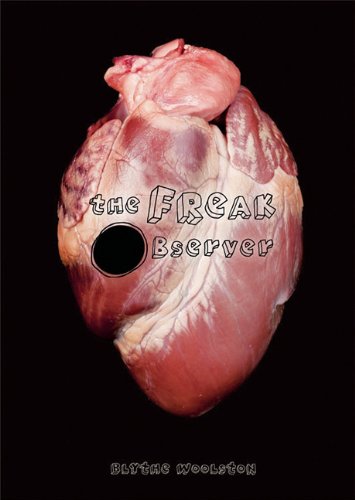
Wither withers away...we recommend that The Freak Observer go on to the next level of Smackdown.


Freak Observer

Tracy: For those looking for a good read - an interesting character, move-along plot, quirky structure - then pick up The Freak Observer by Blythe Woolston. While you may ask yourself how much more can go wrong in this girl's life - as my Smackdown partner wrote, "even the dog died!" - as a reader, I never forgot that at the heart of this story of multiple tragedies is Loa, a character I was willing to invest in right to the end. Her resilience, combined with her wit and smarts, makes her a young woman teen readers will respect.  

The employment of interesting physics facts and problems preceding each chapter has a metaphorical connection that will provoke stronger readers into going beyond the book to look up anti-matter, Dolly the sheep, and the freak observer.  For those not into the wonderful world of physics, these tidbits can be skipped over with no loss to the enjoyment of the story.

Robin: I enjoyed the wry humour of the narrator’s voice (I always wonder if these aren’t exactly the thoughts going through a kid’s head as I meet with them or teach them), but I did wonder how many problems one kid can have, which almost turned me off at the beginning, but once I finished -   Wow! First, I needed to look up a whole bunch of stuff and spent about 30 minutes on the net (incl. the author’s blog and FB page) happily searching and finding images, artists, artwork, and items mentioned in the novel. I loved the way Woolston marries science and plot. I also appreciated the way that she can seemingly just pick a line out of thin air and it just so works, you know?

As I was reading, I remember thinking, “Does this poor girl have no one in her corner?” but then it turns out that she did - a teacher - which made me think about how sometimes we teachers can make a difference when we don’t even know we’re making a difference. I’m sure Mr. B didn’t know. I wonder if Mr. B was based on a real teacher in Woolston’s adolescence? Looking at her blog and FB, she looks like a seriously unique individual - not unlike our “neurotypical” (166) narrator.

Wither

Tracy: I really wanted to like this book.  As a person who loves speculative fiction, this seemed right up my alley. However, having read other young adult books in the same vein,such as The Hunger Games trilogy, The Uglies, and The House of the Scorpion, Wither was a letdown.

While Katniss and Tally were strong, commanding characters with flaws and virtues that compelled me to turn the pages, as I write this, I have already forgotten the protagonist's name. (Sneaking over to my couch, I have grabbed the book to discover her name is Rhine.)

I even admit to skimming through the last third of the book, so I could read the end where she makes her "big escape".  Trust me, this is no spoiler alert, as you are told on the book cover this is part of a trilogy.  It's as if Lauren DeStefano took the physical transformation through pretty clothes and make-up from The Uglies, the genetic testing and manipulations from The House of the Scorpion, and a post-apocalyptic landscape filled with haves and have nots from The Hunger Games, and watered down the best elements of these novels to write Wither.

Robin: My thoughts on Wither by Lauren Desterfano. Okay, so I’m not in love with this one. I found it way too depressing and it had that Chick Lit obsession with the description of everyone’s clothes and makeup which I’ll admit was necessary sometimes to plot/character, but I just don’t get into it. This dystopian society is just too much for me and seems much too bleak. I wouldn’t be comfortable recommending it to jr hi students because of the very casual way sex is mentioned in some parts and the creepily sinister sexual predation of the males in other parts. Apparently it is the first of a planned trilogy, and the ending certainly leaves one flat. Don’t get me wrong, I read it with interest and mostly enjoyed it, but I certainly didn’t find enough to recommend it over our other choice, which caused me to think and wonder and research. As escape fiction, Wither is good if you like that sort of thing, but not good enough.

5 Opinions 1 Winner

It was a dark and stormy meeting. Andrew’s voice bellowed like so much thunder…Dia and Annabel huddled under the library tables hoping to escape his wrath….till the calmer, redacted (thanks for the new word Brad)version of Every You Every Me could move on to the next round.

Actually there were five of us at ABM voting and it was a split decision 3 to 2. Andrew was disappointed and even called me a bully – I know shocking but I believe this is just a residual effect from last year’s SD. The whole panel can agree that both books are worth reading and that both books suffered from different weaknesses and strengths. We felt Dark Days of Hamburger Halpin was best when it focused on the introduction of a deaf high school student into a regular high school. When the second half of the book lapsed into a silly Hardy Boys adventure we all lost a bit of interest. We all liked the writing style of EYEM but the angst was very angsty and we did feel that this book would be harder for students to pick up on their own. A reader will have to invest some time but once this story turns to mystery it becomes more successful and you want to know where the pictures are coming from. We disagreed on the ending which I found interesting but others found forced. Why did it edge ahead? I think because there is, amongst the angst, really thoughtful themes that are enhanced by the photography within.

Thursday, February 2, 2012

OK for Now vs Conspiracy of Kings

Okay for NowvsA Conspiracy Of Kings


What Jaylene said....I love books that teach you something (in this case about John James Audubon) and this novel grabs you right from the beginning. It is set in the late 60's and has the classic feel good story of a young male who eventually shines through his struggles to emerge with amazing potential. The author keeps the reader accountable with little snippets like, "A week later, I wasn't at the library when it opened at ten o'clock, and if you've been paying attention, you should know why." There are no language or content factors to consider and plenty of opportunities to open discussions about controversial issues within the context of the plot. Much more readable than the Conspiracy of Kings, but it had an unsatisfactory ending.
What Vanessa said...It was a a real book, about a real boy, in a real town. In a land where vampires and demons are fairly common, it was nice to just read about a normal boy. I loved the symbolism of the birds from the Audubon books and how they inspired our main character to not only find himself but all the lost paintings.

What Jaylene said...Megan Turner engages her readers by immersing them in the past world of Kings. You find yourself taking the side of Sophos (eternally filled with self-doubt) who enters the heroic journey purposefully misfigured and hardly able to walk. It is all about the battle for land, power, and recognition. Kings who hope to become the next eponymic name spoken on the tongue of all their loyal subjects. Were it not for the section entitled Some Persons of Greater and Lesser Consequence provided at the end of this fourth book in the series, I might have been lost at times with the names (mostly of Greek origin). A great read!

What Vanessa said...see my previous post, I did not find this a great read mostly because the wall I had to climb over to get to the interesting stuff was far to tall and wide for me.

Winner this round: OK for Now