Smackdown Books 2021

Ordinary Hazards
We Dream of Space
If These Wings Could Fly
We Are Not Free
The King of Jam Sandwiches
All Thirteen: The Incredible Cave Rescue of the Thai Boys' Soccer Team
The Companion
Punching the Air
Show Me a Sign
Land of the Cranes
Furia
Dragon Hoops
When Stars Are Scattered
Snapdragon
The Radium Girls: The Scary But True Story of the Poison That Made People Glow in the Dark
American as Paneer Pie
Tune It Out
The Gilded Ones
The Left-Handed Booksellers of London
Switch

Monday, January 9, 2012

A Tale Dark and Grimm vs. Stuck on Earth


When I finished reading my second book over the holiday, I kept thinking back to my first round from last year. Last year, I started out by reading When You Reach Me, the book I thought I would not like as much, and saved Fever Crumb for the holiday, and ended up being disappointed. I just did a book talk for When You Reach Me today and I was quite excited to share it with students. This all makes me think about using these books in the near future.
So this year, I switched things up and read the one that caught my eye first: A Tale Dark and Grimm by Adam Gidwitz. The book trailer is cool and the reference to fairy tales was both interesting seemed readily applicable to a Fractured Fairy Tales unit I already do. The book begins with a teaser, warning, “Read on if you dare” and cautions the reader to make sure that the little children are all in bed because the story we are about to read is a dark one. The story begins, “Once upon a time, fairy tales were awesome.” The narrator laments that the original Grimms’ fairy tales have been watered down, and insists that the original, bloody, gory, nasty stories were better (and who would argue?). This new tale takes the original Grimms’ Hansel and Gretel and spins out their tale to follow them on a journey through eight other fairy tales (on the premise that Hansel and Gretel are really the characters in other tales). What is really engaging about this book, though, is the narrator’s voice. He (or she?) is the one who warns us to put the little kids to bed and reminds us that fairy tales are awesome. He interjects frequently to warn us about upcoming gore and to give us comments on the action. The narrator’s voice is what makes this story fun to read. I think kids will like it a lot, too. I read it quickly because I didn’t want to put it down, but I certainly did not read it out loud to my three-year-old. Junior High students may also enjoy the fact that Hansel and Gretel are definitely the heroes and the adults are largely flawed. This book is my winner for this round.
If you’re still interested in knowing about Stuck on Earth, I’ll let you know that I was much more impressed with it than my second book from last year’s round one. However, unlike the narrator in the Grimm book, I found the narrator in Stuck on Earth to be annoying. I had reservations to begin with. The story is about an alien who comes to earth to determine whether humans have redeeming qualities or if we should all be blown up. The narrator is Ketchvar III, a snail-like alien come to earth to inhabit an earthling’s body to investigate our species. He crawls up fourteen-year-old Tom Filber’s nose to get into his brain and banishes Tom’s consciousness to his colon. I am always leery of books with jokes about snot and poop. I was further annoyed by the tone of the narrator. Some parts of the book were meant to be his correspondence with the mother ship, but the voice falters as he explains things to his commanders in a way that he wouldn’t have to. It’s just there to explain things to the reader. The tone falls apart distractingly. However, I have to admit that, about halfway through, when the mother ship isn’t responding and he has an identity crisis and begins to wonder if he’s really an alien, or if he’s really Tom Filber, going crazy, it gets a bit interesting. The story is fairly predictable, but I think some students might enjoy it. If I was doing an environmental theme, I might recommend it or read it to kids. It was certainly not as bad as Fever Crumb, but not as good as A Tale Dark and Grimm. So, I’ve weeded it out of competition for you. You’re welcome. Send me something good for round two in return, please!

The Mostly True Story of Jack vs. Marbury Lens


Best beginning ever! Not this blog entry but the beginning of The Mostly True Story of Jack by Kelly Barnhill. I was hooked and could hook every junior high reader in my school after the first page:

“His mother said his face looked like a field of roses. What his mother did not know was that the scars had memories. They knew things. It’s coming, the scars said. It’s back, they whispered. No, Frankie thought, shaking his head. Not it. He. He’s coming. We knew he’d come back.”

Jack’s parents are divorcing and he must go to stay with his Aunt and Uncle while his older brother, mother and father get things sorted out. As soon as Jack’s mom leaves however, Jack finds he can’t make contact with her any longer, his Aunt and Uncle are weird and there seems to be vines creeping into his room. Did I mention the house seems to be breathing? Did I mention that the man in charge of this new town has made a pact that involves his son’s life and Jack’s? And of course there is Frankie who disappeared years ago only to be forgotten by everyone but his twin sister until he returned with the scars. Yep that will do it, sold to the kid who sails across the table first. The story continues with adventure twinning with fable through this mostly true tale. It may lose a few readers as fable takes the upper hand in a don’t piss off Mother Nature ending but I really liked the flow and along with Arlene would move this one on.

Meanwhile while I read Jack, Arlene started Marbury Lens. Each day Arlene would look paler and say this book is disturbing. Excellent I thought bring on the crazy. This book has another Jack and things aren’t going so well with him. He is kidnapped after a drunken party and barely escapes the sexual predator who has him. He chooses not to go to the police but winds up along with his best friend kidnapping the kidnapper who they accidently kill when he falls bound out of the truck. They choose not to call the police. This all happens before page 50. At this point, I figure mature reader but very exciting….then Jack goes to London to check out a boarding school. In a pub he meets Henry, someone who insists he knows Jack. He leaves Jack a pair of purple glasses and disappears. Once Jack tries on the glasses he is flipped into another world where he and two other boys run for their lives from flesh eating beetles and strange men with black and white eyes, purple boils on their bodies and body parts hung around their necks. There are plenty of entrails, death violence and gore. For the Darren Shan crowd they might really like this. The problems is Jack continues to flip through both worlds, promptly vomiting upon return (I swear it happens about 20 times) meets a ghost to start a third story and frankly by this time I’m a little bored. Jack what’s the point? By the end I still don’t know. We're going with the younger Jack.

Dia and Arlene

OK for Now vs. Prince of Mist


Well, this round was an easy pick for me. One book I absolutely loved, and the other one couldn't have been more lame.

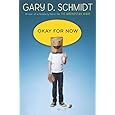
OK FOR NOW - This novel is set in the 1960s and is told from the perspective of Doug, an 8th grader who moves to a small town with his timid mother, abusive father, and cruel older brother. He also has another brother (the oldest) who is away fighting in Vietnam. Each chapter begins with a painting of a bird by an artist called Audubon. The paintings intrigue Doug and are interwoven into the plot as symbolism for him and his experiences with other characters. OK for Now is funny, dramatic, tense, and light-hearted all at the same time. Doug encounters many struggles throughout the book but only grows stronger from each of them, and best of all, affects the other characters he comes into contact with in a positive way. My favorite aspect of the book is the author's ability to convey layers of meaning with few words, always alluding to some larger idea without coming right out and saying it (which was a MAJOR flaw of the other novel I read). The underlying idea of the story reminds me of a quote I heard once, which is, "Be kind to everyone you meet; you never know when someone is fighting a harder battle than you." It might sound sappy, but the book had a great message about overcoming adversity and other peoples' negativity when it comes to achieving one's own dreams and realizing potential. I don't think I've done it justice at all in my description, but this book just made me happy and I would whole-heartedly use it with my grade 7 or 8 students.

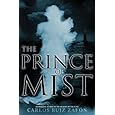
PRINCE OF MIST - This story is also set in the past, although this time it's 1943 (I think) and the Carver family is leaving town to escape the ravages of WW2. The father, a watchmaker, moves his family into this old house in a harbor town far away from the troubles of the war. However, the family soon encounters problems much worse in the form of an evil ghost statue/man/clown/fortune teller/fog monster (he changes forms) who has come to settle a bet that was made with him long ago. This book tries way to hard to be scary and comes across as a joke. As I mentioned with my other novel, everything is spelled out exactly how the reader is intended to interpret something, which gets annoying after a while. There are parts of the plot that are completely ignored as the story carries on. For example, the oldest sister, Alicia, is portrayed as a sullen, moody girl who apparently "has left more behind than anyone realizes" when their family has to move. Then, one day, the main character Max (her brother) invites her to go diving with his new friend and all of a sudden she is happy and personable. What happened to all of this baggage she supposedly had? Why was that even mentioned at least 3 times in the first two chapters and then totally forgotten? This book is just too contrived for me to like it. The horror parts weren't scary, the romance parts were awkward, and I couldn't wait for it to be over.

If I had to recommend a reading level, I would say junior high. It's hard to say if a younger audience would find this book scary or interesting. I think I have a pretty low threshold for horror, so if I thought it was cheesy, I'm sure a junior high kid who has more tolerance for the weird and gruesome would not find this much of a thriller either.

That said, OK For Now moves on to the next round!

Beauty Queens vs Draw the Dark


Van said “ Both books has pros and cons and I am delighted to say I liked both more than I didn’t like them. Draw the Dark seemed like it had such great potential. It was a real-life story with a slight fantasy-like twist. The problem was that I would read some, enjoy it, put it down then have no desire to pick it up again. The story was good but not deep but it was more like a nice, light snack. I ate it, it tasted OK, I forgot about it. Beauty Queens grabbed me from the beginning. I loved the idea of teenage beauty queens stranded on an island and how the new society would play out. It was light and funny and Libba Bray went after the jocks, the pretties and the nerds equally. The problem I found was the end of the book. It needed some serious editing which is a typical problem in many Libba Bray books. That being said, I still loved it. It is Beauty Queens for me!”

Jaylene said, “While both of these are higher level than Junior High due to language and content, they are very different reads. Draw the Dark was an awesome read until about half way and then it failed to keep my interest. Beauty Queens is full of fun (pirates included) and unusual twists (who owns the island?), yet there was the impression of trying to include absolutely every possible element to the point of being over the top. In the end, Beauty Queens was simply cooler.

Beauty Queens to the next round!

Yummy vs. Sign Language


Definition of SMACKDOWN


1: the act of knocking down or bringing down an opponent

2: a contest in entertainment wrestling

3: a decisive defeat

4: a confrontation between rivals or competitors

OK. So, I’ll start this out by admitting that going into this, while I understood the whole literary blog thing, I was a little fuzzy on the concept of “Smackdown.” As a boy I was busy reading poetry, petting dogs and getting my ass kicked, while my classmates were watching WWF and perfecting various forms of playground torture, so you’ll forgive the initial ignorance. When I tracked down the above definition I thought that item #4 was most useful as a way to consider what we are doing here.

And then I read my books. Yummy: The Last Days of a Southside Shorty by G. Neri and Randy Duburke, and Sign Language by Amy Ackley both fall under the broad banner of YA literature and both feature young protagonists who are damaged by circumstances beyond their control. Beyond those connections, it is hard to imagine two books that are more different in tone, subject matter and, I suspect, target audience. This makes the process of voting one of them off the island painfully arbitrary. I see now that my eyes lit upon the wrong definition initially; this will really be “a contest in entertainment wrestling” with the opponent being my conscience. Here is a quick overview of each book:

 Yummy is a short graphic novel (94 pages) that depicts the true story of the life and death of Robert “Yummy” Sandifer (Here is the link to the Time magazine article that brought nation-wide attention to the story http://www.gregneri.com/Time_magazine.html) a young boy who was both a perpetrator and a victim of gang violence in Southside Chicago. The story unfolds through the perspective of, Roger, an eleven year old classmate of Yummy’s, who serves as our narrative thread throughout the novel. Roger is our guide through the story, but Neri allows for a number of voices to be heard, and these often disparate pieces of dialogue add to the poignancy of a story that we are forced to bear witness to. Duburke’s black and white palate adds a starkness and a sharpness to images that are meticulously detailed (think Craig Thompson level of craftsmanship with a grittier feel befitting the subject matter) to capture the emotional weight of each moment. This is a novel that can – and in most cases, will –be consumed in one sitting, but it also will encourage and reward re-readings. The novel forces us to not only deal with the “truth” of a central character for whom a teddy bear and gun are both accurate symbols, but also with larger issues of representation of truth that are complicated (in a really great way) by the graphic novel form.

The subject matter of Amy Ackley’s Sign Language is no less serious: 12 year old Abby’s father fights – and loses –a battle with terminal cancer and this becomes the frame –and distorting lens –for Abby’s coming of age (Amy is 14 at the novel’s close) story to play out. Rather than the mean streets of Yummy’s Chicago we get the calm lakeshore and middle-class sensibilities of Highland, Michigan. Throughout this long (391 pages), but carefully crafted, novel, we will revisit a host of familiar teen novel tropes: crush on brother’s friend (Check), close friend of opposite sex who is, of course, much more (Check), very public experience of first menstrual period (Check), Etc. I realize that the previous sentence sounds dismissive, but to Ackley’s credit these experiences are clearly Abby’s – not some generic teen construct ‘s–and the presence and, later, the absence of her father lends nuance and depth to scenes that we may initially feel like we’ve seen before. Ackley is at her best when dealing with the complex emotional and intellectual discourse that emerges from the juxtaposition of the “normal” trauma that is being 13 and the abnormal trauma of losing a parent in a slow and painful manner. Midway through the book, it was so clear to me that Ackley had nailed what Abby was going through that I actually looked to her biographical details to see if she had experienced it herself. Not surprisingly, Ackley’s father died of kidney cancer when she was a teenager, and there is a depth and poignancy to her handling of Abby’s – and to a lesser extent the family’s – multi-faceted grief that rewards a careful and attentive reader.

So, as I noted at the outset, we are faced with two novels – two very good novels –that offer very different reading experiences, although they also offer some remarkably common ground. Reading these two books together in a short time period forced me to grapple with some compelling questions relating to medium and message: How do the “facts” of Yummy’s story change when presented in sequential image? How does Amy Ackley’s own story shift when it is transformed into Abby’s story in a work of fiction? Were I forced to decide between these two books for my classroom, I suspect that I wouldn’t and would rather, as I’ve already started to do here, explore the possibilities that emerge when we bring these two works together. For the purposes of the Smackdown, however, I don’t think I can get away without declaring a winner. Ultimately, I’ll have to go with Yummy, despite my respect for Sign Language. It would be a disservice to Sign Language to dismiss it as vacuous “chicklit”, because it is a lot more than that, but it is also hard for me to picture many teenage boys – and a number of teenage girls- reading Sign Language from start to finish, even though they would probably emerge from the experience with a better understanding of an important dimension of the human experience. I think I could realistically hand Yummy to anyone of any age and feel confident that they would be intrigued and quite possibly moved by the experience. Read them both if you can, but we’ll see Yummy in the next round, and, I expect, well beyond that.

Sunday, January 8, 2012

Running in the Direction of Wonder!


Now Is the Time for RunningNow is The ime for Running by Michael Williams is a pretty real look at two brothers fleeing from Zimbabwe. The only problem is that this book has everything. First, it has a developmentally challenged brother whom the hero struggles to protect during the annihilation of their village and their subsequent run into South Africa. They later encounter forms of refugee slavery, immolation and rioting by a xenophobic crowd, a descent into hopelessness and drugs, and finally redemption on the pitch of the International Homeless Soccer games. I really enjoyed this book. It tells an important story and is entirely accessible by teenage readers. The brothers’ love and co-dependence palliates the horror of the story. The book though felt a bit like the author was covering all the possible permutations—there were about three different stories here. The main character’s motivation revolves around the care of his brother, so when his brother dies (halfway through the book,) the character and the story lose focus.

Story is timely too as we are not too far from the vuvuzelas of the World Soccer Games in South Africa. And it’s really neat that the homeless games actually exist—and in Canada too!

So--- I read Now is The Time for Running first. Couldn’t put it down and had absolutely no interest in my other book—the silly picture book Wonder Struck by Brian Selznick. Wasn’t too interested in Wonderstruck’s artwork either— I gather that I am in the minority on this one but thought the drawings a bit pedestrian. But—this is the book I will choose. I was wonderstruck! Stayed with me.


Selznick melds two stories together in a magical way that is all his own. I enjoyed the book a lot. Made me want to read his first, The Invention of Hugo Cabret. Story deals with loss – our heroes both are deaf and both have lost their sense of self (dealt with in non-sentimental, almost perfunctory way.) Lots of coincidence and unexplained characters make entrances and exits, but because of the magic of the format (pictures that covered huge chunks of the plot) all things became acceptable.

It is deceptive—the pictures take the story in linear and non linear directions so story is complex and still will attract students who don’t like reading. So- I’ll choose Wonderstruck to go on to the next round but I will buy Now is the Time for Running for the library and for our Peace Unit. I figured out the best way to sit on the fence!! Oh yeah!


Tuesday, January 3, 2012

The Freak Observer vs. Down the Mysterly River

The Freak Observer by Blythe Woolston

There are two distinct ways to review this novel by Blythe Woolston: as a piece of literature intended for mature and close reading audiences; or as a YA book intended for a high school student. And both would produce quite different results.


As a novel, The Freak Observer is intelligent and subtle. Each chapter begins with a physics problem, and by the end of the novel, they all begin to connect together (I must admit some of--ok, most of-- the theoretical physics went right over my head…I study the humanities, not science!). I don’t know how many teenage readers

looking for something about teens are going to connect with the physics aspect of it either, but for those willing to put in the time, the connections are strong.

The novel focuses on a teen girl named Loa (although it took alot of pages before I figured out she was a girl) who is from a poor family that has experienced its share of tragedy, including the death of her younger sister. But we don’t hear too much about that. She has haunting dreams of death, but we only hear about that occasionally. She sort of has a boyfriend for a while, but once he is gone we almost never hear about that again. This novel feels as though Woolston has started several stories and not really finished any of them. This is certainly just my opinion, but the novel felt irritatingly fractured at points. There was very little flow.


Now, of course, this fractured narrative is the very definition of a teenager, as they move on quickly from things in their lives, and they really don’t want to talk about the things that they don’t want to talk about. That is clear. And it makes sense in the novel. Loa is a very authentic voice, and her thoughts and words ring true to who she is. But I still can’t decide if it made a great novel or not.

I also question how many teen readers will take the time to take in and enjoy the subtlety of this novel. I question if Woolston really hit her target audience here. I can see some students really getting it, but I can see the majority of them becoming frustrated with the story and either giving up on the book, or not enjoying it.

Some people will love this book, and some will hate it. I still can't decide if it is a really great book or if it is just a failed attempt at targeting the pains that teenage girls must deal with.

Down the Mysterly River by Bill Willingham

This book, for me, had the potential to be excellent. A lost Boy Scout, talking animals, an endless series of adventures, and bad guys with mysteriously powerful blue swords. It all sounded good to me, maybe it would bring me back to being a kid and loving the Redwall series. But it didn't.

The story isn't bad, the action sequences are pretty good, and the mystery is alright, but none of it is great. Most of this book is distinctly average. I quite liked the ending (even though I guessed the solution to the main mystery part way through the story), and wonder if it would have been better to know the ending before the end. It could have made the story so much more than it already was. And that is the main issue that I had with Mysterly River: the possibility of greatness, but never truly achieving what it could have been.

There are definitely good parts to this book, including the cast of heroes, who are enjoyable and provide good contrasts to one another. The imagination used to create the invented world is good as well. But for a book that is supposed to be a fun adventure, it just wasn't fun enough.

This novel is definitely for a lower reading level than is The Freak Observer, as I could see kids in grades 7 and 8 liking the book. And it would be useful in finding examples of foreshadowing, as it is possible to figure out what the big surprise at the end will be.

And the Winner is...

I'm going to advance The Freak Observer. It deserves the opportunity to have someone else read it, and see what they think.